Marble Sheets vs Marble Tiles: Which is better for your interior design?
Choosing a decorative surface involves more than selecting an attractive pattern. The material should suit the intended application, installation method, maintenance expectations and overall interior design. Marble inspired finishes remain popular because they bring visual depth and an elegant character to interiors. When comparing Marble Sheets with marble tiles, however, the better option depends on the space and purpose of the installation.
Both formats can create an appealing finish, but they differ in construction, appearance and fitting requirements. Understanding these differences helps homeowners, architects and interior designers make decisions based on practical needs rather than appearance alone.
Understanding the two formats
Marble tiles are individual pieces made from natural marble or manufactured materials designed to replicate its appearance. They are arranged in a pattern and installed piece by piece. As a result, grout lines or joints usually remain visible between sections. Their size, texture and performance vary according to the material selected.
Decorative marble sheets are larger panels designed to create a marble inspired surface. Depending on their construction and dimensions, they may cover a wider area with fewer visible divisions. They are not automatically equivalent to natural stone and their suitability depends on the product specifications.
Buildwell includes UV Marble Sheets in its interior decoration range. These products should be considered according to their stated applications and technical details rather than assumed to have the same properties as every natural or manufactured marble tile.
Appearance and design flexibility
The visual effect is often the first difference people notice. Tiles create a segmented arrangement which can be used deliberately as part of the design. Different tile sizes, layouts and grout colours can introduce structure and detail. Natural marble may also have variations from one piece to another, giving a distinctive stone appearance.
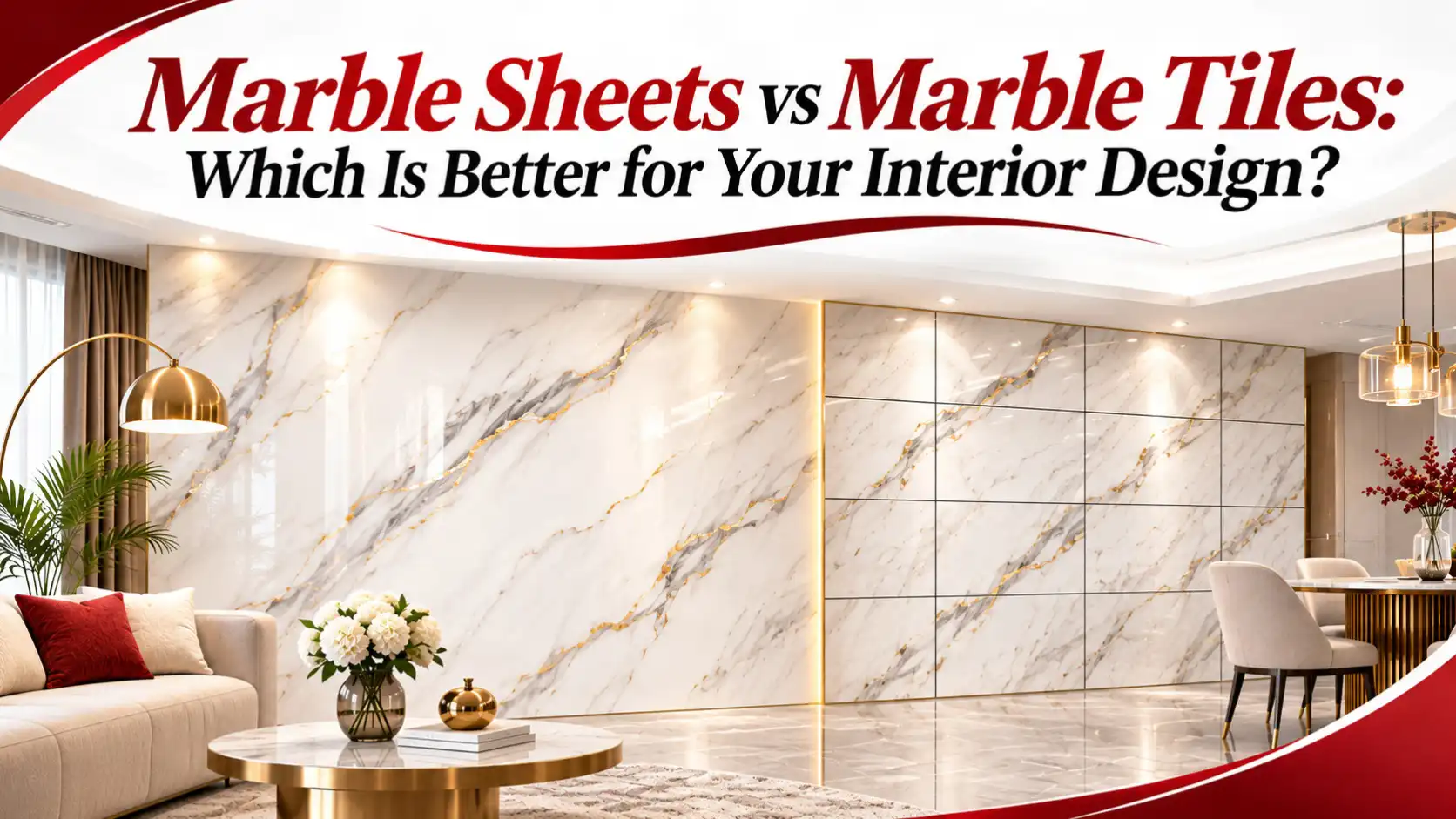
Larger decorative panels can create a more continuous pattern across an approved surface. This may suit interiors where fewer visible joints and a coordinated finish are preferred. Pattern alignment matters particularly when the design includes prominent veins or contrasting shades.
Consider the room’s lighting, furniture colours and surrounding textures before choosing either format. A bold marble pattern may work as a feature while a quieter design can complement a larger area without overwhelming it.
Installation requirements
Marble tiles are generally installed individually. The process involves preparing the substrate, applying suitable fixing material, positioning each tile and completing the joints. Accurate spacing and level placement are important because uneven installation can affect both appearance and usability.
Decorative sheets follow a different installation process based on their construction and intended use. Larger panels may reduce the number of joints across suitable applications, but they still require accurate measurement, careful cutting and compatible fixing materials. Handling and alignment are important to avoid edge damage or visible inconsistencies.
Do not assume that a decorative sheet intended for furniture or interior panels is suitable for flooring. Confirm the approved application and installation method with the manufacturer before work begins.
Maintenance and everyday care
Maintenance depends on the material, finish and location. Natural marble can require specific care and may be sensitive to acidic substances or staining. Appropriate cleaning products and periodic maintenance may be necessary to preserve its appearance.
Manufactured tiles have different characteristics depending on their composition and surface treatment. Their cleaning instructions should be checked with the supplier. Decorative panels also have product specific care requirements. Follow the manufacturer’s guidance and avoid abrasive pads or harsh chemicals unless expressly permitted.
Buildwell UV Marble Sheets should be cleaned according to the care instructions supplied for the product. Routine dust removal and prompt attention to marks can help maintain a neat appearance. However, no material should be described as maintenance free without supporting specifications.
Durability and application suitability
Durability is not determined by appearance alone. Material composition, thickness, surface treatment, installation quality and environmental conditions all influence performance. Natural stone tiles may suit certain demanding applications when correctly selected and installed. Manufactured tiles also vary in their resistance to moisture, wear and impact.
Decorative sheets are designed for specified applications. Before selecting one, check its construction, thickness, surface coating and compatibility with the substrate. Areas exposed to heat, moisture or frequent physical contact may need products with particular performance characteristics.
Compare the technical information for the exact products under consideration. Buildwell UV Marble Sheets belong to its interior decoration category, but recommended uses should be confirmed from the relevant product information before installation.
Comparing the overall project cost
The purchase price is only one part of the project budget. Preparation, labour, fixing materials, cutting, wastage and finishing can all affect the final amount.
Tile installation involves positioning individual pieces and completing joints. Natural marble and manufactured alternatives may also differ considerably in material cost. Decorative sheets may reduce certain fitting steps in suitable applications, although panel dimensions, substrate preparation and specialised cutting can influence the total expense.
Ask suppliers or installers for an estimate based on the same area and application. Ensure the quotation includes preparation and finishing so the comparison reflects the complete project rather than the price of individual pieces.
Which option should you choose?
Marble tiles may be suitable when the project calls for an individual tiled format, a particular stone material or an application for which the selected tile is specifically rated. They can also provide design flexibility through different sizes, layouts and joint patterns.
Marble Sheets may be worth considering for approved furniture and decorative applications where a coordinated marble inspired finish is the priority. Their larger format can create a more continuous visual effect, subject to panel dimensions and installation quality.
There is no universal winner. The right material is the one whose specifications match the surface, conditions and design brief. For flooring, wet areas or high traffic locations, verify suitability rather than relying on appearance.
Make the decision with the application in mind
Before purchasing, check the intended use, dimensions, thickness, finish, substrate compatibility and installation instructions. View a physical sample where possible because lighting can change how colours and patterns appear. Discuss maintenance expectations and request a complete installation estimate.
For selected interior decorative applications, Buildwell UV Marble Sheets offer an option to explore. Compare the exact product details with your project requirements and consult the product team if any application detail is unclear.
A successful interior finish comes from matching the material to its purpose. By weighing appearance, installation, care and total cost, you can choose confidently between tiles and decorative panels.
Contact Buildwell
For product enquiries and details about the interior decoration range, contact the team.
Email:sales@buildwell.in
WhatsApp: 7900336699
Toll free: 1800 102 8031
Recent Posts