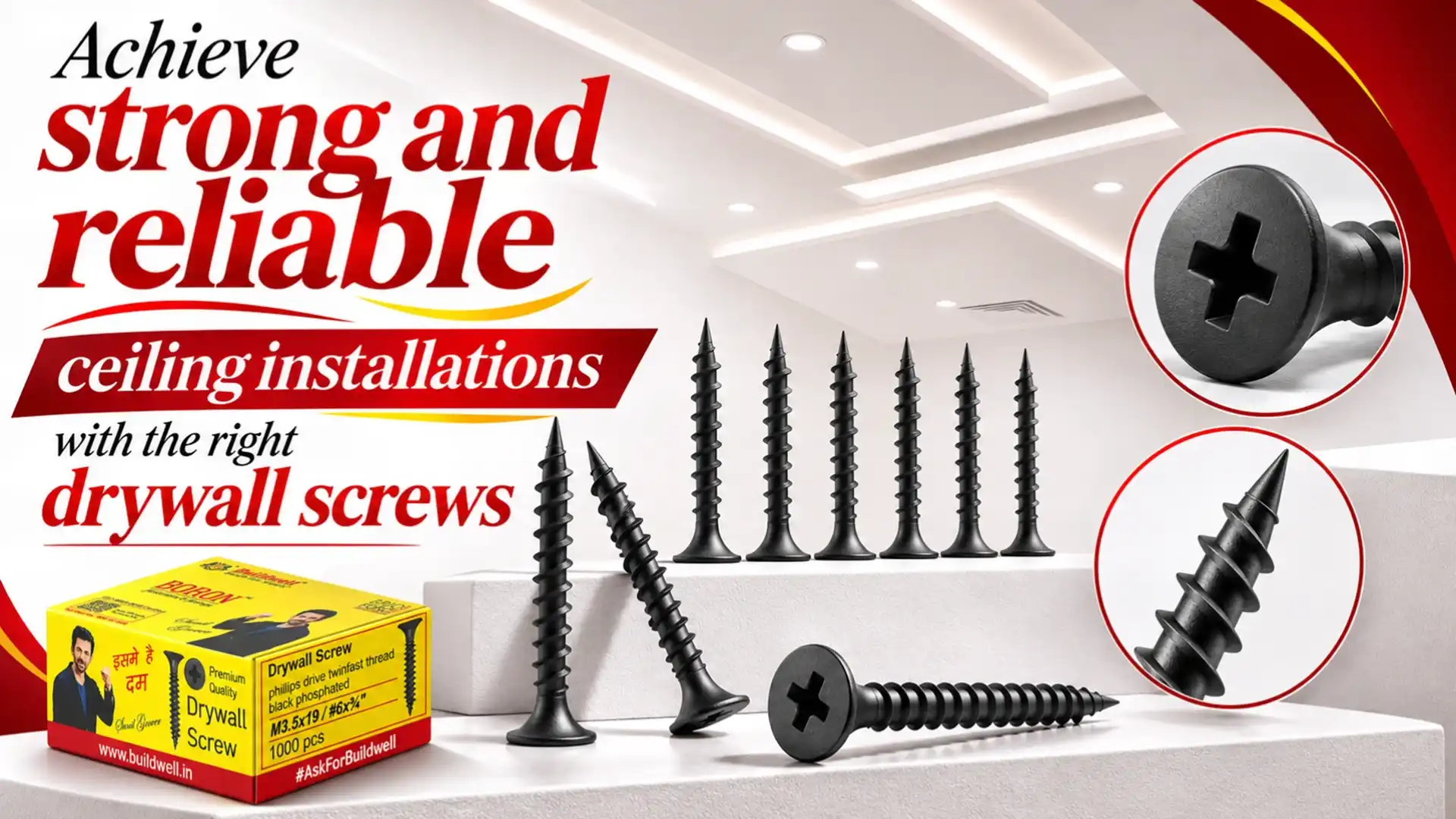
Achieve strong and reliable ceiling installations with the right drywall screws
A dependable ceiling installation begins with the right materials and careful workmanship. Gypsum boards, supporting frameworks and fastening components must work together to create a stable structure. Although fasteners are small compared with the boards they hold, their selection directly influences how securely the ceiling components are fixed. Choosing a suitable Drywall Screw helps connect gypsum boards to compatible framing members and supports a consistent installation.
The fastening process also affects the finishing stage. Incorrect screw selection, poor positioning or excessive driving can damage the board surface and create additional work. Understanding the role of different screw features helps contractors make informed decisions before starting a ceiling project.
The foundation of secure board fixing
Once a ceiling is complete, its supporting framework and fixing points remain hidden. Their importance, however, does not diminish. Each gypsum board needs appropriate support and secure attachment to the framework to perform as intended.
General purpose fasteners may not provide the right combination of thread design, head shape and length for gypsum board installation. Specialised screws are designed for particular board and framing combinations. Selecting the correct type helps reduce fastening problems and makes the installation process more controlled.
A suitable fastener should hold the board firmly without unnecessarily damaging its paper facing. This balance is important because the surface must remain suitable for joint treatment and finishing.
Understanding the details of screw design
Different screw features serve specific purposes. Checking them before purchase can help installers choose a product that matches the ceiling system.
Thread design: The thread determines how the fastener engages with the supporting material. Coarse thread options are commonly used with timber framing, while fine thread options are generally intended for compatible metal framing. The correct type depends on the framework and manufacturer recommendations.
Head shape: Many gypsum board fasteners have a bugle shaped head. Its design helps the head sit slightly below the board surface when installed correctly. This creates a suitable fixing point for subsequent finishing.
Length: The fastener must pass through the board and achieve adequate engagement with the supporting framework. Its length should be selected according to board thickness and the framing requirements.
These features should be considered together. Choosing a screw based only on its overall size may lead to an unsuitable fixing method.
Matching fasteners with the ceiling framework
The supporting structure plays a major role in fastener selection. Timber and metal frameworks have different characteristics, so they may require different thread configurations.
For timber framing, a compatible coarse thread design is generally used. Metal framing typically requires a suitable fine thread option. Installers should confirm the correct specification for the selected framework instead of treating these types as interchangeable.
A Drywall Screw must also suit the thickness of the gypsum board. An unsuitable length may result in insufficient engagement or create complications during installation. The board system manufacturer’s instructions should guide the final choice.
Buildwell includes Drywall Screws in its ceiling product range, alongside Gypsum Boards, T Grid, Channel System and Jointing Compound. Selecting compatible materials for each stage helps contractors maintain consistency throughout the project.
Avoiding mistakes during installation
Fastening errors can affect both board stability and the appearance of the finished ceiling. One common mistake is driving the screw too deeply. If the head breaks through the board’s paper facing, the fixing point may lose some of its holding capability.
A screw that remains above the board surface can create another problem. Its raised head may interfere with joint treatment and leave an uneven area after finishing.
Incorrect spacing should also be avoided. Fasteners must be positioned according to the board manufacturer’s recommendations and the requirements of the ceiling system. Guesswork can result in inconsistent support and unnecessary rework.
Using the wrong thread for the framing material may also affect grip. Checking compatibility before installation is a simple step that can prevent avoidable problems.
A controlled approach to board fixing
Preparation should begin before the first board is secured. Check that the supporting framework is properly aligned and suitable for the selected gypsum board system. Plan the board layout and identify the recommended fixing positions.
Use an appropriate screw gun or screwdriver with depth control to maintain consistent fastening. The fastener should enter the supporting framework correctly and sit slightly below the board surface without tearing its paper facing.
Avoid applying excessive force. If a screw does not enter as expected, check its alignment and compatibility rather than forcing it into position. Incorrectly installed fasteners should be corrected according to the relevant installation guidance.
Watch the application process to see how careful positioning and controlled driving contribute to a cleaner result. Following the system manufacturer’s instructions remains essential throughout the work.
Supporting a smoother finishing process
Board fixing and surface finishing are closely connected. Correctly positioned screw heads create consistent points that can be treated during the jointing process. When fasteners are installed unevenly, additional correction may be required before the ceiling can be finished.
A suitable Drywall Screw therefore contributes to more than board attachment. It also supports the preparation of a uniform surface for subsequent work. However, the final appearance depends on several factors, including board handling, joint treatment, finishing materials and workmanship.
Buildwell offers ceiling products used across different stages of installation. Coordinating the appropriate boards, framework components and fasteners helps contractors plan their work more effectively.
What to check before purchasing
Before selecting fasteners, review the framing type, board thickness, thread configuration and recommended installation pattern. Check that the screw head is appropriate for gypsum board fixing and that the length provides the required engagement.
Also consider the tools being used. Suitable equipment with depth control can help installers maintain consistent fixing points and avoid unnecessary surface damage.
Product specifications should always take priority over assumptions based on appearance. If a project has particular structural or installation requirements, consult the relevant manufacturer or a qualified professional before proceeding.
Reliable ceilings begin with careful choices
A strong ceiling is created through several connected decisions. Boards, supporting frameworks and fasteners must be compatible, and each component must be installed correctly. Paying attention to small details during construction can help reduce problems during finishing and improve the consistency of the completed work.
Choosing the right Drywall Screw supports secure gypsum board fixing when the product matches the framing and installation requirements. Buildwell offers these fasteners as part of its ceiling product range, helping contractors source an essential component alongside other ceiling materials.
The key is to select carefully, prepare properly and follow recommended installation practices. A dependable ceiling is built from the details that remain hidden after the work is complete.
Contact Buildwell
For product enquiries and details about the ceiling product range, contact the team.
Email: sales@buildwell.in
WhatsApp: 7900336699
Toll free: 1800 102 8031