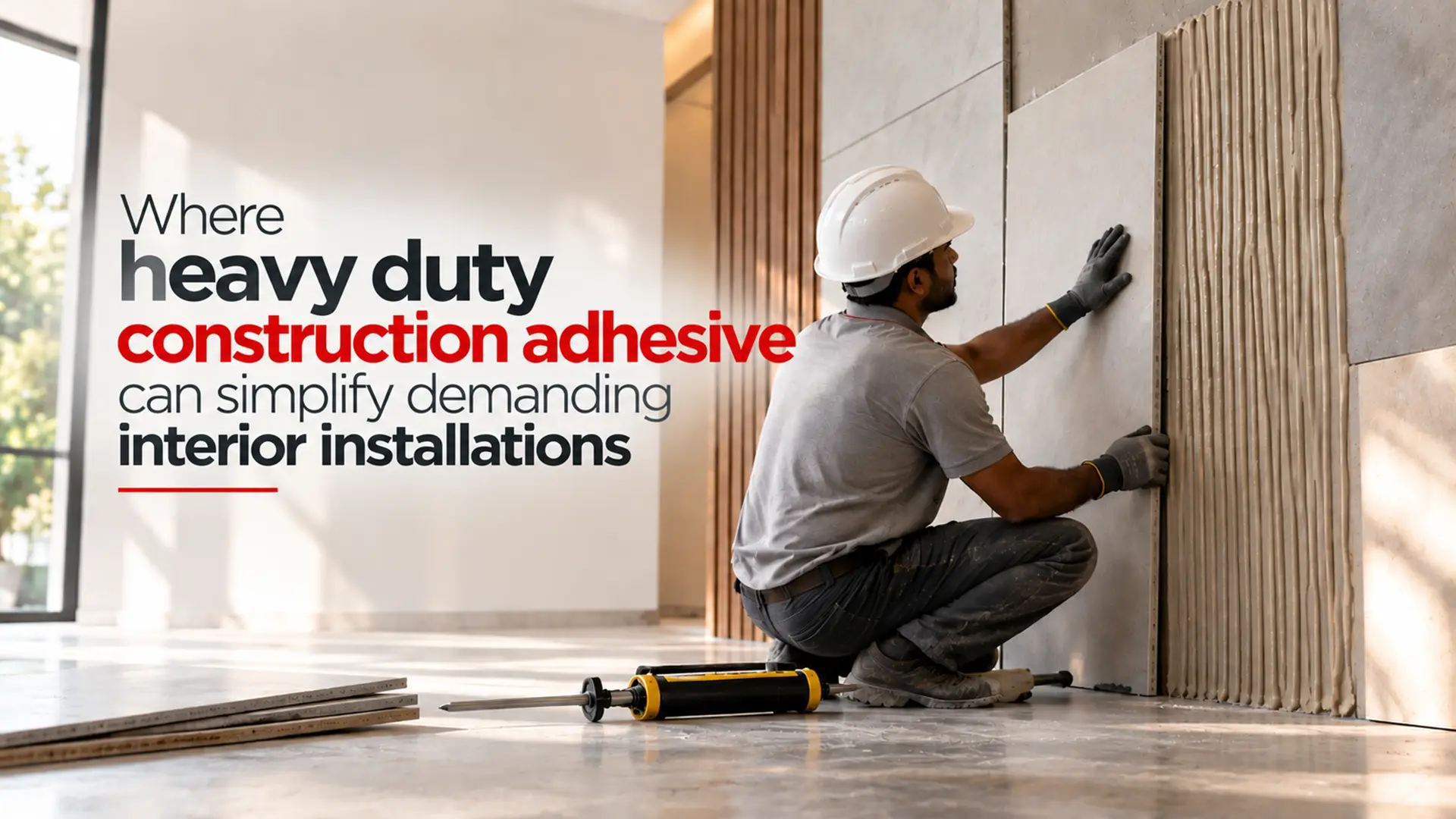
Where heavy duty construction adhesive can simplify demanding interior installations
Interior installation projects often involve materials that need to be positioned accurately and fixed securely without making the process unnecessarily complicated. Heavy Duty Construction Adhesive can have a useful role in suitable applications where compatible materials need to be bonded as part of the installation process. Its value comes from how appropriately it is selected, prepared and applied rather than simply using adhesive for every fixing requirement.
Demanding projects also involve more variables than a simple installation. Surface condition, component size, positioning, working time and site conditions can all influence the bonding process. Buildwell includes construction adhesives within its broader range of interior and installation materials, giving contractors another material to consider when planning appropriate fixing methods.
Start by identifying the fixing requirement
Before selecting an adhesive, the first question should be what the installation actually requires. Different interior components may have different fixing needs, and not every material or application is suitable for bonding.
The weight, size and position of the component should be considered alongside the condition of the receiving surface. The manufacturer’s application guidance should always determine whether the selected adhesive is appropriate.
This initial assessment helps ensure that Heavy Duty Construction Adhesive is used where its intended application matches the requirements of the project.
Surface preparation sets the foundation
Adhesive performance begins with the surfaces being joined. Dust, loose particles, grease or unsuitable residues can interfere with contact and make the bonding process less predictable.
Before application, the receiving surfaces should be prepared according to the product instructions. Any required cleaning or preparation should be completed before the adhesive is introduced.
A clean and suitable surface gives the installer better control and creates a more appropriate starting point for the bonding process.
The amount applied needs control
Using more adhesive does not automatically create a better installation. The quantity and application method should follow the manufacturer’s recommendations for the intended use.
Excess material can create unnecessary mess and may make finishing around the component more difficult. Too little material may not provide the required contact.
Controlled application allows Heavy Duty Construction Adhesive to perform its intended role without turning the fixing process into a material handling problem.
Positioning becomes critical
Once adhesive has been applied, the component needs to be positioned carefully. This is particularly important when the item being installed has a defined profile, edge or decorative alignment.
Correct positioning should be planned before the adhesive is applied. This reduces the need for repeated movement and adjustment during installation.
For contractors, preparing the component and confirming its position in advance can make the bonding stage more efficient and reduce avoidable corrections.
Bonding can support cleaner detailing
Some interior installations benefit from reducing the visual presence of mechanical fixing points where the material and application are suitable for adhesive bonding.
This can be useful for selected decorative profiles and compatible interior components where a clean appearance is part of the design objective.
However, adhesive should not be treated as a universal replacement for mechanical fixing. The correct method depends on the product, surface and application requirements. Buildwell materials can be considered within a broader fixing plan where different methods have clearly defined roles.
Working time affects the installation sequence
Adhesive application needs to be coordinated with positioning and finishing. Preparing too much material at once can create unnecessary pressure on the installer, while delays after application may affect handling.
A planned work sequence allows surfaces to be prepared and components to be positioned within the recommended working conditions.
For Heavy Duty Construction Adhesive, understanding the product’s working characteristics helps contractors organise the installation instead of making timing decisions during the middle of the fixing process.
Site conditions should not be ignored
Interior projects can take place under different temperature, humidity and dust conditions. These factors may influence how an adhesive is handled and applied.
The manufacturer’s recommendations should therefore be checked against the actual site environment before work begins.
If conditions are unsuitable for the intended application, the installation sequence or fixing method may need to be reconsidered. This makes site assessment an important part of material selection rather than a final check.
Component weight and position matter
A small decorative component and a larger installation element cannot automatically be treated in the same way. The size, weight and position of the component should be evaluated before deciding whether adhesive bonding is appropriate.
Vertical or overhead applications may also require particular attention to the manufacturer’s instructions and recommended fixing method.
This is where careful planning becomes important. Heavy Duty Construction Adhesive should be selected according to the actual application rather than the assumption that a stronger adhesive can be used for every situation.
Tools and preparation improve control
Good installation depends on having the right materials and tools ready before the adhesive is opened. Surface preparation equipment, measuring tools and appropriate application tools can help maintain a more organised workflow.
Having everything prepared also reduces interruptions once the bonding process begins.
The adhesive is only one part of the installation. Buildwell can be considered alongside other interior materials and fixing accessories when project teams are planning a complete installation sequence.
Avoid unnecessary movement after placement
Once a component has been positioned, repeated movement can interfere with the intended bonding process. Installers should therefore confirm alignment before placement and handle the component carefully afterwards.
This is particularly relevant for decorative applications where even a small shift can affect the visual continuity of adjoining elements.
A controlled approach helps reduce unnecessary adjustments and keeps the installation process more predictable.
Storage is part of product management
Adhesive should be stored according to the manufacturer’s instructions before it reaches the application stage. Packaging needs to remain protected and the product should be handled appropriately.
Organised storage also helps prevent confusion when several adhesives or fixing materials are present on the same site.
Good material management supports the work performed during installation and helps contractors maintain a more consistent workflow.
Know where mechanical fixing is still needed
Adhesive has a specific role and should not automatically replace mechanical fastening. Some applications may require screws, clips or other fixing methods depending on the material and installation conditions.
In suitable situations, different fixing methods may also be considered together according to the manufacturer’s guidance.
Understanding this distinction allows Heavy Duty Construction Adhesive to be used more responsibly as part of an overall installation method.
Finishing quality begins with accurate fixing
The quality of the final interior finish depends partly on how accurately the components are installed. Uneven positioning, excessive adhesive or poorly prepared surfaces can create additional finishing work.
Careful preparation reduces the possibility of these issues and allows the installer to focus on alignment and final detailing.
For demanding interior projects, this controlled approach can make the difference between simply fixing a component and achieving a clean finished appearance.
Maintenance should be considered before installation
Interior materials remain part of the space after the installation team leaves. Cleaning, everyday contact and surrounding conditions should therefore be considered when selecting the fixing method.
The selected adhesive and bonded material should be appropriate for the intended application and maintained according to the relevant product guidance.
This practical perspective helps project teams think beyond installation day and consider how the complete interior will be used over time.
A more organised approach to demanding installations
Heavy interior installation work becomes easier to manage when every stage has a defined purpose. Surface preparation establishes the starting condition. Correct adhesive selection supports the intended fixing method. Controlled application allows accurate positioning, while careful handling protects the finished detailing.
When Heavy Duty Construction Adhesive is used according to its intended application, it can become a practical part of this organised workflow.
Buildwell’s range of interior and Construction Materials allows contractors to consider adhesive alongside other fixing and finishing requirements. The objective is not simply to use fewer fixing methods but to select the appropriate method for each application.
When the fixing method supports the design
A well planned installation considers both practical requirements and the appearance of the finished interior. Where compatible materials and conditions allow bonding, adhesive can help support cleaner detailing and a more controlled installation process.
The final result still depends on surface preparation, correct application, accurate positioning and appropriate curing or setting conditions according to the product instructions.
Used thoughtfully, Heavy Duty Construction Adhesive can simplify selected demanding interior installations by giving contractors another carefully defined fixing option within a broader installation workflow.
Contact Buildwell
Email: sales@buildwell.in
WhatsApp: 7900336699
Toll free: 1800 102 8031
Recent Posts

How gypsum boards can help create cleaner, more finished ceiling spaces