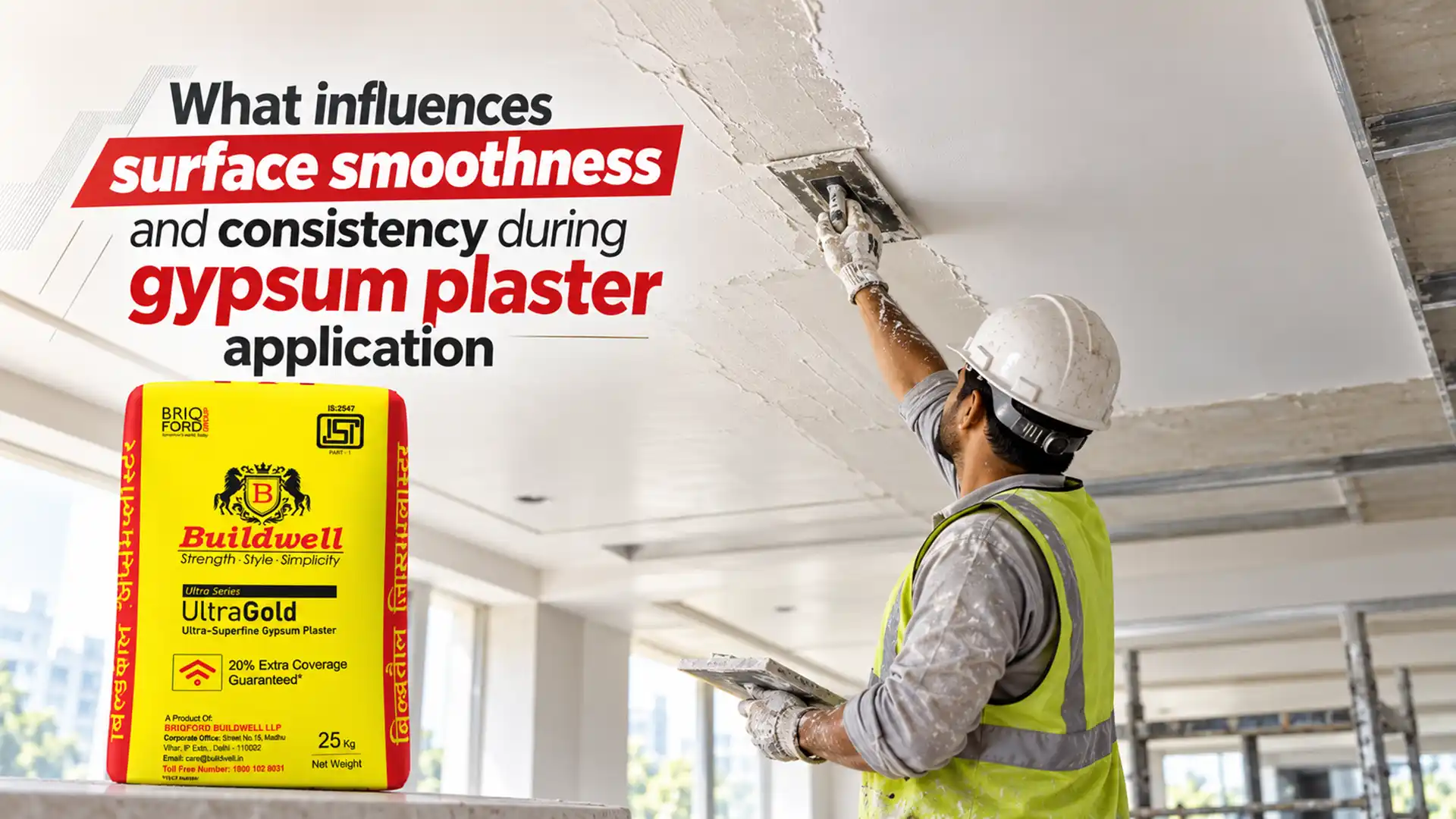
What influences surface smoothness and consistency during gypsum plaster application
A smooth plastered surface is rarely the result of one step alone. The final appearance develops through a sequence that begins with surface preparation and continues through mixing, application, levelling and finishing. Gypsum Plaster can produce a refined surface when each stage is handled with appropriate care and consistency. Even small variations in preparation or application can become visible once the material has set.
For contractors and applicators, understanding these influencing factors is useful because surface quality depends on the complete process rather than simply the plaster selected. Buildwell Gypsum Plaster is part of a broader ceiling material range where consistency during application plays an important role in achieving the intended finish.
The condition of the base sets the starting point
Before any plaster is applied, the condition of the receiving surface needs attention. Dust, loose particles or unwanted residues can interfere with the application process and make it more difficult to achieve an even layer.
The base should be assessed before work begins so that obvious irregularities can be addressed. A reasonably prepared surface gives the applicator a more controlled starting point.
This first stage is often overlooked because the plaster itself receives most of the attention. However, the condition underneath directly affects how evenly Gypsum Plaster can be spread and levelled.
Mixing consistency changes the working behaviour
The material needs to be prepared according to the manufacturer’s recommended method. Water quantity, mixing technique and working time can all influence how the plaster behaves during application.
If the mixture is inconsistent, the applicator may experience differences in spreadability across the working area. This can make achieving a uniform surface more difficult.
With Buildwell, following the recommended preparation procedure helps keep the material behaviour consistent throughout the application rather than relying on repeated adjustments during the work.
Water proportion needs careful control
Water is an important part of plaster preparation, but adding more does not automatically make application easier. The required proportion should be based on the manufacturer’s instructions and the actual working requirements.
An inconsistent water ratio can change the material’s working characteristics and make different batches behave differently. When a large surface is being completed, such variations may become noticeable.
For this reason, Gypsum Plaster should be prepared using a controlled and repeatable process rather than estimating quantities from one batch to another.
Application thickness affects uniformity
The thickness of the applied layer also contributes to the final appearance. Large variations across the same area can make the surface more difficult to level consistently.
Applicators need to work according to the required application conditions and use suitable tools to maintain control. The objective is not simply to cover the surface but to establish a reasonably consistent layer.
The application method used with Buildwell Gypsum Plaster should therefore be approached with attention to thickness, working sequence and the condition of the receiving surface.
Timing matters more than it appears
Plaster has a working period during which it can be spread, levelled and finished. Waiting too long or working at an unsuitable stage can make finishing more difficult.
Experienced applicators generally pay attention to the material’s behaviour rather than treating every stage as having unlimited working time.
This becomes particularly important across larger areas. A consistent working sequence helps prevent one section from being handled very differently from another.
Levelling reveals the quality of the application
Once the material is spread, levelling becomes one of the most visible stages of the process. The applicator needs to identify variations and work the surface into a consistent plane.
Lighting can make minor changes in the surface easier to notice. Strong directional light may reveal marks, uneven areas or changes in texture that are less obvious under softer illumination.
For Gypsum Plaster, careful levelling therefore contributes significantly to how the completed surface appears under actual interior lighting.
Tool handling can influence the finish
The tools used during application have a direct relationship with the way the material is spread and finished. Appropriate tools allow the applicator to maintain better control over pressure, movement and surface alignment.
However, tools alone cannot compensate for inconsistent preparation or unsuitable application technique. The material, applicator and working method need to function together.
Buildwell Gypsum Plaster can deliver a consistent working experience when the recommended preparation and application practices are followed carefully.
Working sequence creates visual continuity
A large ceiling area is rarely completed in one movement. Applicators usually work across manageable sections, making the sequence of application important.
If adjoining sections are handled at significantly different stages, transitions can become more difficult to blend. Maintaining an organised workflow helps the applicator work continuously across the surface.
This is one reason experienced site teams plan the application sequence before beginning. Consistency is easier to maintain when the work progresses in a controlled manner.
Site conditions can change the working experience
Temperature, humidity and general site conditions can influence how materials behave during application. These conditions may vary between projects and even between different areas of the same project.
Applicators should therefore consider the actual working environment and follow the manufacturer’s recommendations rather than assuming that every site will behave identically.
For projects using Gypsum Plaster, understanding site conditions can help teams plan the working sequence and avoid unnecessary variations during application.
Finishing requires controlled pressure
The final finishing stage is where small variations can become more apparent. Excessive pressure, uneven movement or repeated correction can affect the appearance of the surface.
A controlled finishing technique helps maintain consistency across the completed area. The objective should be to refine the surface without repeatedly disturbing sections that have already reached the appropriate stage.
With Buildwell materials, following a disciplined finishing process can help applicators maintain a more uniform appearance from one section to the next.
Consistency between batches matters
Large projects may require several batches of plaster. If each batch is prepared differently, variations in working behaviour can occur.
Using a repeatable preparation method helps reduce unnecessary differences. Measurements, mixing procedures and working practices should remain as consistent as practical throughout the project.
This is especially relevant when Gypsum Plaster is being applied across extensive ceiling areas where visual continuity is important.
Storage and handling should not be ignored
The quality of a plastering process also depends on how the material is stored before use. Packaging should be protected from unsuitable conditions and the manufacturer’s storage recommendations should be followed.
Poor handling can affect the condition of the material before it reaches the mixing stage. Good storage practices help preserve consistency between the product as supplied and the material eventually prepared for application.
Buildwell Material selection should therefore be supported by proper storage and organised site handling.
Smoothness begins with process discipline
It is tempting to judge a plastered surface only after the work is complete. In reality, the final appearance reflects several decisions made much earlier.
Surface preparation, mixing, water proportion, application thickness, timing, levelling and finishing all contribute to the outcome. When these stages are handled consistently, the applicator has greater control over the final surface.
This process based approach is particularly important with Gypsum Plaster, where the quality of application plays a major role in the appearance achieved.
Identifying unevenness before completion
Good site practice includes checking the surface during the application rather than waiting until everything is finished. Early inspection allows visible inconsistencies to be addressed while the work is still progressing.
Different lighting conditions can also reveal details that may not be obvious during application. Reviewing the surface from different angles can provide a better understanding of its overall consistency.
A careful inspection process complements the material quality and application skill that go into a Buildwell installation.
Why applicator experience still matters
Even a consistently manufactured plaster requires appropriate handling. The applicator’s understanding of timing, pressure, levelling and finishing can influence how effectively the material is used.
Experience helps workers recognise changes in material behaviour and respond without creating unnecessary variations.
This means the final performance of Gypsum Plaster is connected to both product consistency and application discipline. Neither factor should be considered in isolation.
Bringing every stage together
Surface smoothness is ultimately the result of multiple controlled steps rather than one finishing action. A clean starting surface supports better application. Consistent mixing supports predictable working behaviour. Appropriate timing allows proper levelling and finishing, while careful inspection helps identify variations before completion.
For projects where a refined ceiling finish is required, Buildwell Gypsum Plaster can form part of this structured application process. The material provides the starting point, while preparation and workmanship determine how effectively that potential is realised.
When each stage receives the same level of attention, the final surface becomes more consistent, visually balanced and easier to evaluate under everyday lighting conditions.
Contact Buildwell
Email: sales@buildwell.in
WhatsApp: 7900336699
Toll free: 1800 102 8031
Recent Posts
Where construction adhesive glue fits into modern interior installation work