How application techniques influence finish quality and long term surface performance
A perfectly finished wall or ceiling is not achieved by selecting a good material alone. It is the result of careful planning, proper surface preparation, skilled workmanship, and disciplined application techniques followed throughout the plastering process. In modern construction, where architects, contractors, and homeowners expect flawless interiors, every stage of plaster application directly influences the final appearance and durability of the surface. This is why Gypsum Plaster has become one of the most preferred Finishing Materials for residential, commercial, hospitality, healthcare, and institutional projects. Buildwell understands that achieving a premium finish depends not only on product quality but also on applying the material correctly from the very beginning.
As construction standards continue improving across India, project owners expect interiors that remain smooth, crack resistant, and visually appealing for years. These expectations can only be achieved when the right material is combined with professional installation practices. Every decision, from cleaning the substrate to completing the final trowelling, contributes to the long term performance of the finished surface.
Every quality finish starts with the surface underneath
No plaster can perform at its best if the substrate has not been prepared properly.
Concrete surfaces often contain dust, loose particles, curing compounds, oil residue, or minor surface imperfections that may influence the bonding of the plaster. Before application begins, professional contractors carefully inspect and prepare the surface to create a stable foundation.
Applying Gypsum Plaster on a properly prepared substrate allows the material to spread evenly while developing better contact with the surface. This helps create consistent finishing quality across both walls and ceilings.
Buildwell believes that successful plastering begins with preparation rather than correction.
Material preparation affects application consistency
Even experienced applicators understand that consistency starts before the plaster reaches the wall.
Correct mixing methods help maintain uniform workability throughout the installation process. When every batch behaves similarly, installers can maintain the same application technique across large project areas without making continuous adjustments.
Properly prepared Gypsum Plaster allows smoother application while helping contractors achieve more predictable results. Uniform consistency also reduces interruptions, allowing installation teams to focus on surface quality rather than correcting material variations.
Small improvements during preparation often create significant improvements in the finished interior.
Skilled workmanship makes the biggest difference
Construction materials continue evolving, but craftsmanship remains irreplaceable.
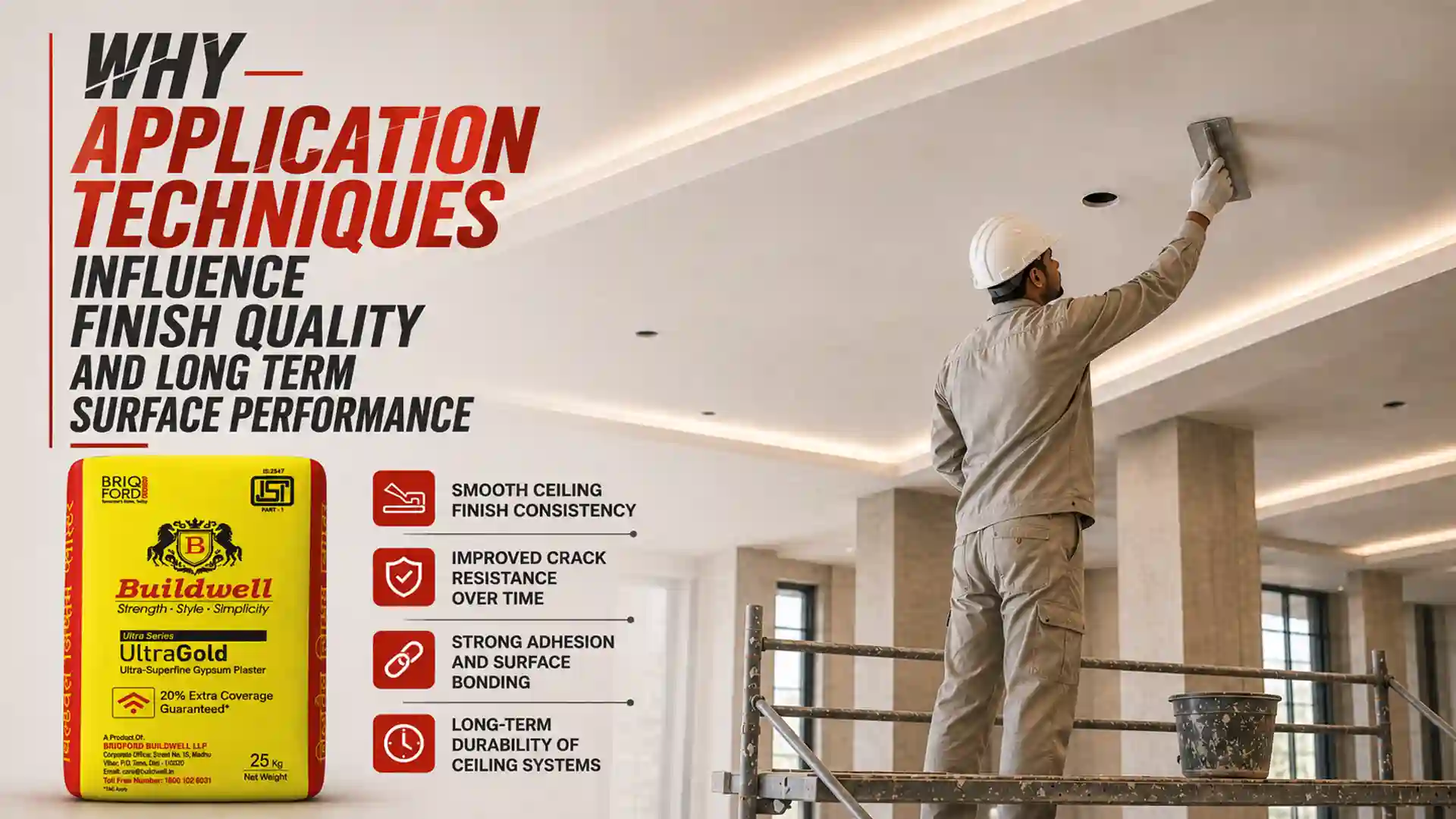
Professional applicators understand how to maintain even pressure, consistent thickness, and smooth movement while spreading plaster across the surface. Their experience allows them to identify small irregularities immediately and correct them before the material begins to set.
Using Gypsum Plaster together with skilled workmanship helps create walls and ceilings that appear smooth, level, and ready for decorative finishes. Instead of relying on excessive sanding or corrections later, experienced installers achieve quality during the application stage itself.
Buildwell recognises that excellent products always perform best in the hands of trained professionals.
Timing is just as important as technique
Every stage of plaster application follows a sequence.
Applying the material too quickly or delaying finishing operations unnecessarily can influence surface quality. Professional contractors organise their work so that each section is completed within the appropriate working period.
Experienced teams applying Gypsum Plaster understand that disciplined timing contributes to better levelling, smoother finishing, and greater consistency across adjoining surfaces.
Rather than rushing the process, they allow each stage to progress naturally while maintaining quality standards.
Good finishing always rewards patience.
Environmental conditions influence plaster performance
Construction projects operate under changing environmental conditions throughout the year.
Temperature, humidity, ventilation, and airflow all influence how plaster behaves during application and drying. Professional teams evaluate these conditions before beginning large scale plastering work.
Applying Gypsum Plaster with consideration for the surrounding environment helps create more consistent finishes while reducing unnecessary complications during installation.
Buildwell believes practical site awareness is just as valuable as technical knowledge.
Successful construction adapts to real working conditions rather than expecting every project to behave identically.
Uniform application creates visually consistent interiors
Large residential developments and commercial buildings often contain hundreds of square metres of plastered surfaces.
Maintaining the same finish quality across every room requires disciplined workmanship and repeatable application methods. Uneven thickness or inconsistent finishing techniques may become visible after painting, especially where natural light falls directly onto the surface.
Professional contractors apply Gypsum Plaster systematically so every section blends naturally into the next, creating walls and ceilings that appear continuous rather than divided into separate work areas.
This consistency enhances the overall appearance of the completed building.
Coordination between construction activities protects finished surfaces
Plastering does not take place in isolation.
Electrical installations, ceiling framework, plumbing, HVAC systems, and painting activities all interact during the finishing stage of construction. Poor coordination can damage completed plaster work and create unnecessary rework.
Project managers schedule Gypsum Plaster application carefully so major structural and service installations are completed before final finishing begins wherever possible.
Proper coordination protects completed surfaces while improving overall project efficiency.
Buildwell understands that teamwork between different construction trades produces better outcomes than isolated working practices.
Continuous inspection maintains quality standards
Quality should be monitored throughout the project rather than only after completion.
Experienced supervisors inspect substrate preparation, material consistency, application thickness, levelling accuracy, and surface smoothness as work progresses. Identifying small imperfections early prevents larger corrections later.
Projects using Gypsum Plaster benefit greatly from continuous quality inspection because consistent supervision helps maintain the same finishing standards across different rooms, floors, and installation teams.
Preventive quality control remains far more effective than corrective repairs after handover.
Long term performance depends on today’s workmanship
Interior finishes are expected to remain attractive for many years after construction is complete.
The durability of those finishes depends heavily on the care taken during installation. Proper preparation, disciplined application, environmental awareness, and skilled workmanship all contribute to surfaces capable of supporting paint and decorative finishes throughout the building’s lifecycle.
Choosing Gypsum Plaster provides architects and contractors with a dependable finishing material, but achieving maximum performance depends on applying that material correctly at every stage of construction.
Buildwell continues supporting modern construction through products designed for practical site conditions and professional finishing requirements.
Why professional application adds lasting value
A premium interior is never created by materials alone.
Successful projects combine quality products, experienced workmanship, organised planning, and disciplined execution. These factors work together to produce walls and ceilings that maintain their appearance despite years of everyday use.
Construction professionals increasingly prefer Gypsum Plaster because it supports modern finishing requirements while allowing skilled installers to achieve smooth, durable, and visually refined interiors.
As expectations for construction quality continue increasing, professional application techniques will remain one of the most valuable investments made during any building project.
Conclusion
Finish quality is influenced by every stage of the plastering process. Proper surface preparation, consistent mixing, skilled workmanship, careful timing, environmental awareness, coordinated project planning, and continuous quality inspection all contribute to surfaces that remain smooth and durable for years.
Selecting high quality Gypsum Plaster allows architects, contractors, developers, and homeowners to achieve premium interior finishes that meet modern construction standards. When dependable materials are combined with professional application techniques, the result is a stronger, more consistent, and visually appealing surface that supports long term building performance.
Buildwell remains committed to delivering innovative plastering Products that help construction professionals achieve superior finishing quality across projects of every scale. By focusing equally on product excellence and application discipline, Buildwell continues supporting interiors that perform beautifully throughout their lifecycle.
Contact Buildwell
📧 Email: sales@buildwell.in
💬 WhatsApp: 7900336699
📞 Toll-free: 1800 102 8031
Recent Posts
Where construction adhesive glue fits into modern interior installation work