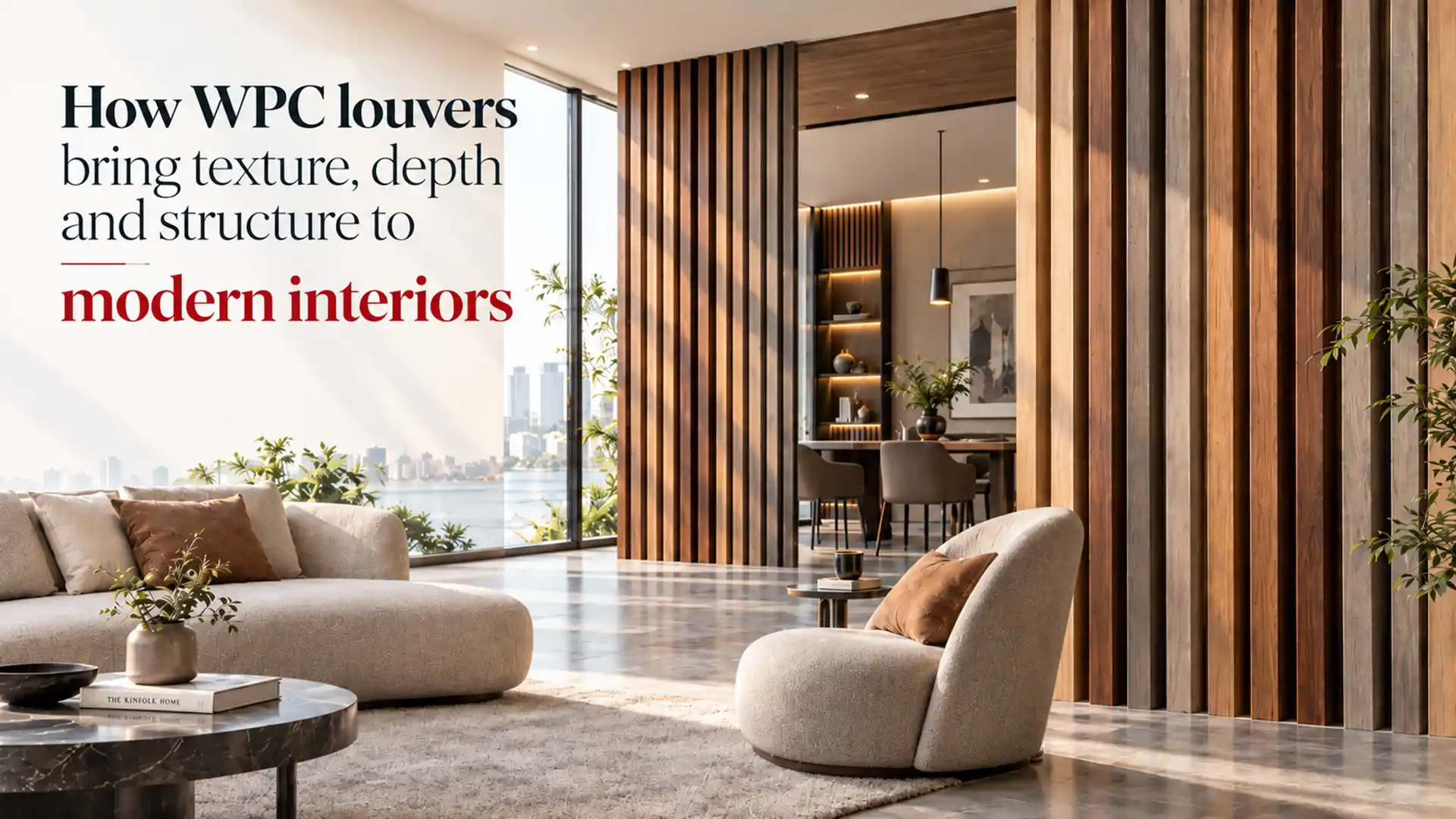
How WPC louvers bring texture, depth and structure to modern interiors
Modern interiors are moving towards cleaner forms, but clean does not have to mean plain. Texture, rhythm and depth can make a carefully planned space feel more expressive without adding unnecessary visual elements. WPC Louvers offer a distinctive way to introduce linear detailing, creating a structured surface that interacts naturally with light, colour and surrounding finishes.
The appeal lies in their ability to create definition through repetition. Instead of depending on multiple decorative elements, a series of consistent profiles can establish a strong visual identity while keeping the overall interior composed. Buildwell interior range includes WPC louvers alongside other decorative products, giving designers and project teams different materials to consider when developing contemporary spaces.
When simplicity needs another layer
A modern interior often begins with a restrained palette. Neutral surfaces, simple furniture and uncluttered layouts provide a calm foundation, but large uninterrupted areas can sometimes lack visual depth.
This is where a linear decorative treatment can change the character of a space. The repeated profiles introduce shadow lines and a subtle sense of layering. Depending on the selected finish and surrounding materials, the same basic pattern can feel warm, sophisticated or distinctly contemporary.
With WPC Louvers, the texture becomes part of the architecture rather than an additional decorative object placed into it.
The rhythm created by repetition
There is something naturally organised about repeated vertical lines. They establish a visual rhythm that allows the eye to move across a surface while maintaining consistency.
The spacing between individual profiles also contributes to the appearance. Narrower gaps can create a denser visual effect, while wider spacing may feel more open and relaxed. The choice should therefore relate to the size of the feature area and the overall design language.
Rather than treating the profile as an isolated detail, Buildwell can be incorporated into a broader material plan where proportions and visual balance are considered together.
Depth changes with the light
Texture becomes particularly interesting when lighting enters the picture. Raised and recessed portions of a louvred profile respond differently as light moves across the surface, creating natural variations between highlights and shadows.
During daylight, these changes may remain subtle. Under carefully positioned artificial lighting, however, the linear pattern can become more pronounced.
This makes WPC Louvers useful in interiors where the intention is to create a feature that does not remain visually static. The appearance can shift according to the time of day, direction of light and surrounding environment.
A warmer direction for contemporary design
Many contemporary interiors use materials with smooth, hard and highly uniform finishes. While these choices create a crisp appearance, introducing a wood inspired surface can provide a softer visual counterpoint.
The linear profile keeps the design modern while the finish can bring warmth into the composition. This balance is particularly useful when an interior needs character without becoming heavily decorative.
A carefully selected Buildwell finish can sit alongside neutral surfaces, metallic details, glass elements and simple furniture while maintaining a cohesive appearance.
Where the feature belongs matters
The effectiveness of a textured feature depends heavily on placement. Covering every available surface can reduce the impact of the pattern, while positioning it selectively can make the feature feel intentional.
A louvred section may work as a visual backdrop, a transition between areas or a focal point within a larger interior composition. The surrounding surfaces can then remain relatively understated.
This selective approach allows WPC Louvers to contribute depth without making the entire interior feel busy.
Proportion decides the visual impact
The same profile can produce very different results depending on the dimensions of the area where it is installed. A compact feature may need a different arrangement from a long uninterrupted section.
The height, width and surrounding elements should therefore be considered before finalising the layout. Furniture scale matters as well. A very dense pattern beside oversized furniture can create a different visual balance from the same pattern used with lighter forms.
For projects using Buildwell interior products, thinking about proportion at the planning stage can help create a more connected overall composition.
Texture can define different zones
Open interiors do not always need physical separation to establish different areas. Changes in material, texture or pattern can provide visual cues while maintaining a sense of openness.
A structured louvred feature can help distinguish one area from another through a change in surface treatment. This approach can be particularly effective in contemporary commercial and residential settings where flexibility and visual continuity are important.
The repeated lines of WPC Louvers can create this distinction without relying on an excessive number of decorative components.
Pairing textures without creating visual noise
One of the most important considerations is what surrounds the louvred feature. Texture becomes more noticeable when placed beside a comparatively smooth finish.
Combining several strong patterns in one small area, on the other hand, can make the composition feel crowded. A better approach is often to establish one dominant texture and allow supporting materials to remain quieter.
Buildwell Products can be considered alongside complementary finishes to create a controlled relationship between texture, colour and form.
Installation becomes part of the appearance
Decorative profiles depend on consistency. Uneven alignment, inconsistent spacing or poorly planned edges can interrupt the visual rhythm that makes the feature attractive in the first place.
Measurements should be checked carefully before installation and the layout should account for corners, joins and termination points. These details may appear small during planning but can become highly visible once the complete feature is viewed from a distance.
For WPC Louvers, installation accuracy is therefore closely connected to the final visual result.
Beyond one design style
Linear profiles are not limited to a single interior aesthetic. The overall appearance can change considerably depending on the finish, surrounding colours, lighting and furniture.
In a warm contemporary setting, the feature can complement natural looking materials. In a more minimal interior, it can provide contrast through texture alone. Commercial spaces may use the same principle to create a recognisable visual section without adding excessive decoration.
This flexibility allows Buildwell interior range to work within different design directions while retaining a structured appearance.
Maintenance should be considered early
A decorative feature remains part of the interior long after installation is complete. Its everyday upkeep should therefore be considered during material selection rather than after the project is finished.
The profile creates recessed areas that may collect dust over time, making suitable cleaning practices important. Maintenance should follow the manufacturer’s recommendations for the specific material and finish.
When WPC Louvers are planned with their long term upkeep in mind, their visual character can be easier to maintain as the interior continues to be used.
One material, several visual possibilities
The strength of a linear decorative surface comes from how many design decisions can be built around one repeated form. Colour can change its mood, lighting can alter its depth and placement can determine whether it acts as a subtle background or a strong focal element.
That versatility makes it possible to create different expressions without changing the fundamental language of the feature.
Buildwell provides WPC louvers as part of its interior decoration range, allowing the material to be considered alongside options such as fluted panels, SS louvers, PVC panels and UV Marble Sheets when developing a broader interior concept.
Creating character through restraint
Good interior detailing does not always demand more elements. Sometimes the stronger approach is to introduce one distinctive material and give it enough space to perform visually.
WPC Louvers can add texture through their profiles, depth through their shadow lines and structure through their repetition. Their effect becomes more refined when the surrounding design gives those qualities room to stand out.
The final result depends on thoughtful placement, appropriate proportions, coordinated finishes and precise installation. When these elements work together, a linear feature can become more than decoration. It can help establish the visual identity of an entire interior.
Contact Buildwell
Email: sales@buildwell.in
WhatsApp: 7900336699
Toll free: 1800 102 8031
Recent Posts
How WPC louvers bring texture, depth and structure to modern interiors