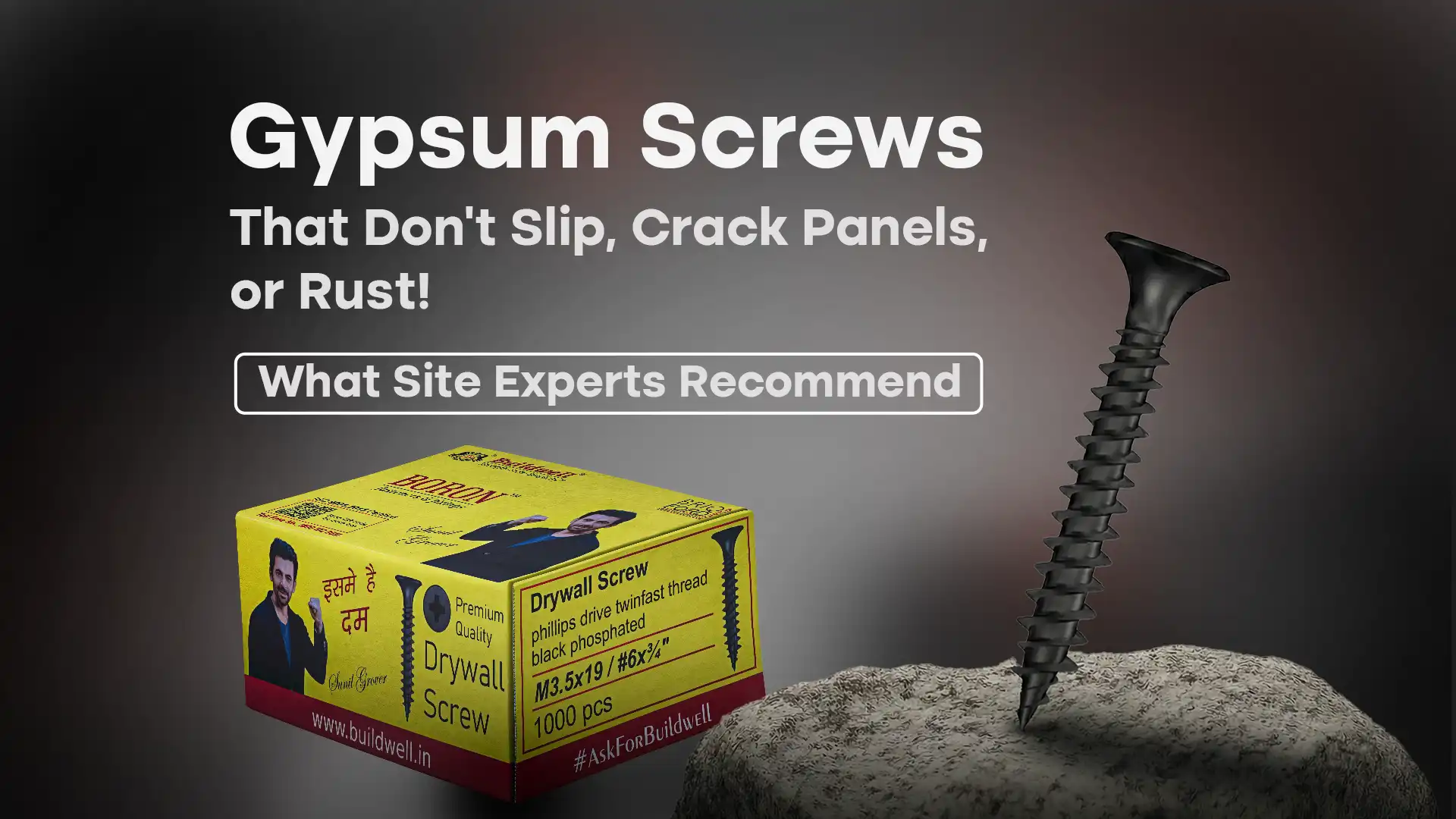
Gypsum Screws That Don’t Slip, Crack Panels, or Rust — What Site Experts Recommend
On most sites, the big focus is on boards, plaster, and finish. But ask any experienced contractor and they’ll tell you — the real problems often begin with the tiniest things. Like the Gypsum Screw.
It might look insignificant. But this one small component literally holds your ceiling together. Get it wrong, and you’ll see sagging boards, cracked edges, and rusted screw heads peeking through paint within months. That’s not just an aesthetic issue — it’s a structural headache.
So what does a good screw actually do right? And what should you look for when choosing one? Let’s break it down.
Why the Screw Is More Important Than You Think
Every ceiling board is anchored to a metal frame — and that anchor point is the Gypsum Screw. It has to:
- Grip without cracking the board
- Pierce steel channels with clean entry
- Hold tight under weight, movement, and vibration
- Resist corrosion in humid conditions
A weak screw compromises all four. Which means your entire ceiling system becomes unstable, no matter how good your board or plaster is.
Common Issues with Low-Quality Screws
If you’ve worked with local or untested fasteners, you’ve probably run into at least one of these:
- Screw Head Slips During Driving: Poorly manufactured heads don’t fit snugly with drill bits, causing slips and damage.
- Screw Threads Don’t Grip Properly: Boards feel loose, and the frame seems weak even after full installation.
- Edges Crack or Bulge Around the Screw: A sure sign the screw wasn’t made for gypsum — usually due to coarse thread or wrong tip design.
- Rust Marks Bleeding Through Paint: Non-coated or badly coated screws are a nightmare once moisture hits.
These failures aren’t just frustrating — they cost you money in rework, replacement, and client complaints.
What Makes a Good Screw?
Site experts agree that the best Gypsum Screw should meet five core criteria:
1. Sharp Piercing Point
It should cut through both board and steel quickly without causing vibration or chipping. Look for fine threads and a sharp Type 17 or self-drilling point.
2. Deep Phillips Head Fit
A shallow or deformed head leads to cam-out. Precision engineering ensures perfect tool engagement every time — critical when installing hundreds on-site.
3. Consistent Thread Pitch
Even spacing ensures better hold in both board and steel frame. Poorly rolled threads lead to uneven grip and eventual loosening.
4. Anti-Corrosion Coating
This is non-negotiable. Zinc-plated or phosphate-coated screws help resist rust in both indoor and semi-humid conditions.
5. Break Resistance
A good screw doesn’t shear during installation — especially under mechanical drivers. It must withstand high torque.
Buildwell Screws: Designed for Real Site Conditions
Not all screws are made for India’s job sites. At Buildwell, we studied where screws usually fail — from panel edge blowouts in North India’s dry zones to rust trails in coastal projects.
That’s why every Gypsum Screw we manufacture undergoes:
- Salt spray corrosion testing
- Thread hold retention tests
- Drill point consistency checks
- Batch-level torque resistance QC
The result? Screws that contractors don’t have to think twice about. They just perform.
Why Professionals Choose a Branded Gypsum Screw
Ask a top contractor why they use a specific screw, and they won’t say price. They’ll say:
- This one never rusts.
- Fits the driver perfectly every time.
- I’ve never had to replace a panel because of it.
In high-pressure sites, speed and predictability matter. A branded Gypsum Screw saves both — reducing tool slips, ensuring tight finishes, and eliminating call-backs.
And most importantly, it ensures that every joint holds, even after the scaffolding is gone.
The Problem with Mixing Local Screws with Branded Boards
Even if you’re using top-grade gypsum boards, pairing them with poor screws is like installing expensive tiles with fevicol.
Cracking, joint pop, and rust streaks are the result. Boards start creaking after a few months. And when you open it up? Half the screws are already loose or corroded.
If you’re investing in quality boards, don’t undercut the system with low-grade fasteners. Use a Gypsum Screw that’s made to match — preferably from the same brand ecosystem.
Real Site Tip: Always Choose Screws Based on Board Thickness and Frame Type
A 13mm board over a 0.55mm GI frame? You need a longer screw with sharp drill point.
A 9mm board in residential false ceiling? A fine-thread, shorter screw will suffice.
Buildwell offers screw variants customized for different ceiling assemblies — so you don’t need to guess. Just pick the right one from a systemized product catalog.
Build It Right. Anchor It Right.
If your ceiling fails, the screw will be one of the first culprits. Don’t let a 1-rupee decision jeopardize a 10-lakh project.
At Buildwell, we take the humble Gypsum Screw seriously — because we’ve seen how badly things can go when you don’t.
Need Site-Tested Screws That Don’t Fail Mid-Project?
💬 WhatsApp: 7900336699
📞 Toll-Free: 1800 102 8031
📧 Email: sales@buildwell.in