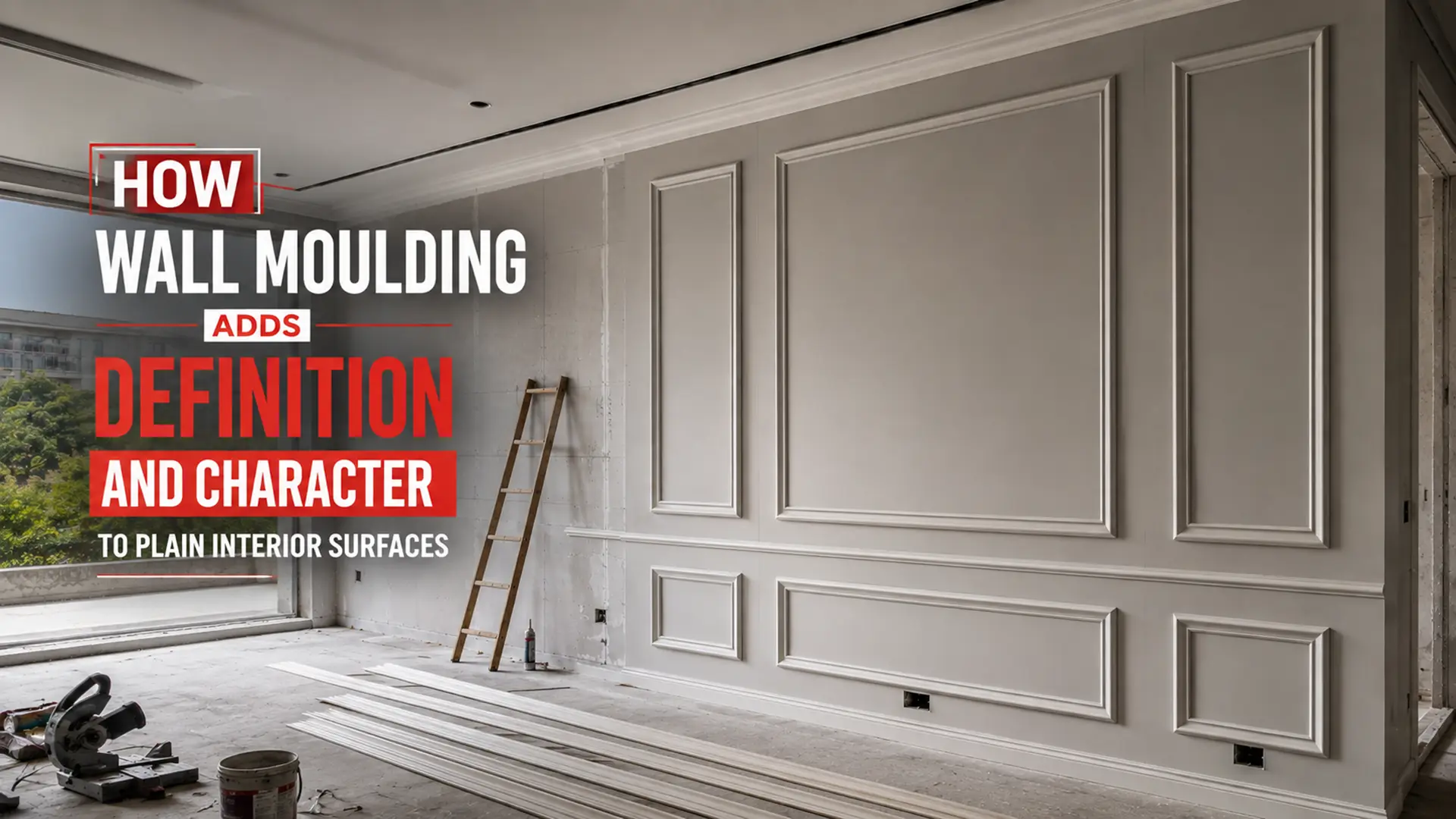
How wall moulding adds definition and character to plain interior surfaces
Plain interior surfaces offer flexibility, but large uninterrupted areas can sometimes feel visually empty. Carefully planned decorative detailing can change that character without requiring an extensive redesign. Wall Moulding introduces framing, rhythm and definition through selected profiles, giving a simple surface greater architectural presence.
Buildwell approaches interior detailing as part of the complete composition. The goal is not to decorate every available section but to identify where a controlled visual intervention can create meaningful impact.
Give the surface a clear purpose
A decorative feature becomes more effective when its placement has a reason.
A television backdrop, console area, headboard section or reception feature can gain stronger definition when the surrounding surface is divided into intentional sections. This creates a visual hierarchy without filling the room with unnecessary decoration.
Buildwell encourages designers to begin with the purpose of the space before deciding on a decorative treatment. Wall Moulding can establish boundaries around important areas while allowing the remaining surfaces to stay calm.
The result feels considered rather than excessively ornamental.
Geometry creates visual order
Interior spaces already contain lines through doors, windows, furniture and architectural openings.
Decorative profiles can extend these visual relationships across a broader surface. Rectangular frames, vertical divisions and balanced sections can introduce structure without relying on elaborate patterns.
Buildwell recommends observing the existing geometry before creating a layout. Wall Moulding works more naturally when its proportions complement the room rather than compete with its architecture.
This approach also makes the decorative treatment feel connected to the space instead of appearing as an isolated addition.
Scale changes the final impression
A decorative arrangement that works in a spacious room may feel excessive inside a compact area.
Room height, surface width, furniture dimensions and viewing distance all influence how strongly the detailing is perceived. Narrow profiles can create understated definition, while broader arrangements can become a stronger visual feature.
Buildwell encourages designers to assess proportions before installation. Wall Moulding should support the scale of the room rather than divide the surface into visually crowded sections.
Good proportion allows decorative elements to remain noticeable without becoming overwhelming.
Light brings the detailing forward
Lighting can reveal architectural details that may appear subtle under ordinary conditions.
Natural daylight can create gentle shadows around raised profiles, while directional lighting can make edges and recesses more prominent. As a result, the same surface can appear slightly different throughout the day.
Buildwell recommends considering windows, wall lights and accent fixtures while planning the layout.
With Wall Moulding, the interaction between projection and shadow can create additional depth without introducing more colours or materials. The finish becomes part of the lighting experience as well as the surface design.
Contrast does not need to be dramatic
Decorative profiles can create visual separation even when they share a similar tone with the surrounding surface.
Depth naturally produces highlights and shadows. A slightly different colour can strengthen this effect, while a matching palette can create a quieter and more sophisticated appearance.
Buildwell supports restrained combinations because they allow the geometry to remain relevant even as furniture and décor change.
A carefully selected Wall Moulding treatment can therefore work with neutral interiors where proportion and shadow provide most of the visual interest.
Framing creates a natural focal point
Framing is one of the most practical ways to give a plain surface greater purpose.
A defined section can draw attention towards artwork, a television, console, headboard or another architectural element. Instead of allowing the object to sit against an uninterrupted background, the frame gives it a visual boundary.
Buildwell considers this particularly useful in rooms where one area needs to become the main point of attention.
Used thoughtfully, Wall Moulding can act as a design tool that guides the eye without physically separating the space.
Furniture should be considered before installation
Decorative detailing and furniture occupy the same visual field.
Large cabinets, sofas, screens, shelves and other elements can interrupt a pattern if their positions are not considered beforehand. Planning the furniture arrangement first can prevent awkward overlaps and unnecessary adjustments later.
Buildwell encourages designers and contractors to treat the surface and its contents as one composition.
A well planned arrangement allows Wall Moulding to frame furniture naturally while maintaining enough visual space around the main elements.
The detailing should support the furniture rather than compete with it.
Repetition can connect different spaces
Decorative geometry can also create continuity between adjoining areas.
A similar framing principle can appear in a living area, corridor, bedroom or reception space without requiring every room to use exactly the same arrangement. Repeating proportions rather than copying an identical pattern can create a more sophisticated connection.
Buildwell recommends controlled repetition because too much uniformity can make an interior predictable.
A consistent design language can make separate spaces feel related while allowing each area to maintain its own character.
Installation accuracy protects the design
Geometric detailing naturally draws attention towards alignment.
Uneven spacing, inconsistent corners or poorly planned junctions can become obvious because the eye follows repeated lines across the surface. Measurements and reference points should therefore be established before installation begins.
Buildwell encourages contractors to review corners, openings, furniture positions and adjoining finishes before fixing the profiles.
Accurate workmanship allows the decorative arrangement to appear integrated into the architecture rather than looking like an element added after the main design was completed.
Maintenance should remain practical
Decorative detailing still exists within an occupied environment.
Dust, routine cleaning, furniture movement and everyday contact can gradually influence the appearance of a finished surface. The location and design of the feature should therefore reflect how the room will actually be used.
Buildwell recommends considering maintenance requirements during material selection rather than after installation.
Areas exposed to frequent contact may require a more restrained approach, while quieter feature sections can accommodate stronger decorative treatment.
Different rooms need different expressions
A living room, bedroom, office, hospitality area and reception space do not communicate in exactly the same way.
A residential setting may benefit from subtle framing that complements furniture and lighting. A commercial reception may use stronger geometry to establish a more formal identity. The layout should reflect the purpose and atmosphere of each space.
Buildwell encourages project teams to avoid copying one arrangement throughout an entire property.
Thoughtful variation can create individuality while maintaining an overall sense of design consistency.
Conclusion
Plain surfaces can gain considerable character through proportion, framing, geometry, lighting and controlled contrast. The objective is not to add decoration everywhere but to introduce detail where it strengthens the architecture.
Wall Moulding can provide that definition by framing focal areas, creating visual rhythm and giving uninterrupted surfaces greater structure. Its success depends on scale, placement, furniture coordination, lighting and installation accuracy.
Buildwell supports architects, contractors and interior designers in developing contemporary interiors where decorative elements serve a clear purpose. Buildwell broader interior range also allows professionals to explore different combinations of profiles, panels, louvers and surface finishes according to the requirements of each project.
When decorative detailing is treated as part of the architecture rather than an afterthought, a plain surface can become a refined feature without making the room feel overloaded.
Contact Buildwell
Email: sales@buildwell.in
WhatsApp: 7900336699
Toll Free: 1800 102 8031