How PVC wall moulding adds cleaner edges and refined interior detailing
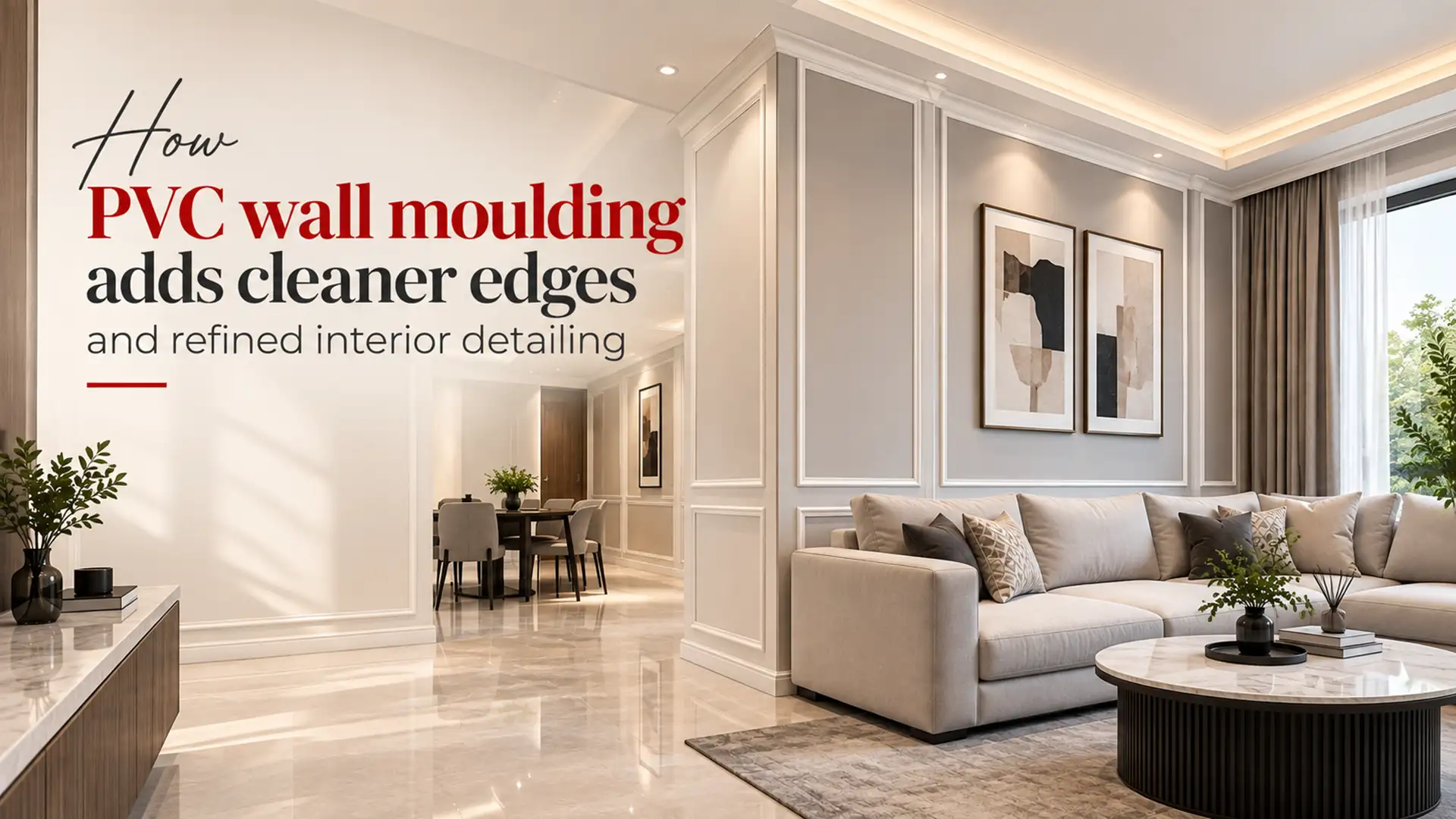
Interior detailing often depends on the small transitions that connect one surface to another. A neat border, a defined frame or a carefully finished edge can make an entire space appear more organised. PVC Wall Moulding provides a practical way to introduce these details while giving selected areas a more finished and structured appearance. Its linear profile can create visual boundaries without making the interior feel excessively decorative.
The effectiveness of moulding does not come only from the material. Its width, profile, colour, placement and relationship with surrounding finishes all influence the final appearance. As part of its interior range, Buildwell offers decorative materials that can be considered when a project needs additional definition and visual detailing.
Why edges influence the overall finish
Large surfaces naturally attract attention but the way their edges are finished can determine how complete the interior feels. An abrupt transition may appear unfinished while a carefully planned border can create a more deliberate visual connection.
Moulding provides a defined line between selected surfaces and decorative areas. It can frame a section, emphasise a transition or create a visual boundary around a feature.
With PVC Wall Moulding, this detailing can be introduced without depending on elaborate patterns or multiple decorative elements.
Creating definition without overwhelming the space
Interior design often requires balance. Adding too many decorative features can make a room feel visually crowded while using too little detailing can leave large areas looking plain.
A narrow moulding profile can offer a middle ground. It introduces a visible line and a sense of structure while allowing the primary surfaces to remain the focus.
This restrained approach works particularly well in contemporary interiors where clean geometry is an important part of the design language. Buildwell can be incorporated where the objective is to add definition while maintaining a relatively controlled appearance.
Framing changes how a feature is perceived
A feature can become more noticeable when its boundaries are clearly established. Moulding can be used to create a frame around a selected section, helping separate it visually from the surrounding surface.
The frame does not necessarily have to be symmetrical or elaborate. Simple rectangular or linear arrangements can provide enough definition to make a feature appear intentional.
The visual character of PVC Wall Moulding can therefore depend as much on its arrangement as on the profile itself.
Working with colour and contrast
Colour is another important part of moulding design. A contrasting profile can create a strong border while a closely matched shade can produce a quieter transition.
Dark moulding against a lighter background can emphasise geometry. A similar tone can instead create subtle detailing that becomes noticeable mainly through changes in depth and light.
Buildwell interior products can be selected according to the desired relationship between the moulding and the surrounding material palette rather than treating colour as an isolated decision.
Light reveals small details
Lighting can change the appearance of even simple decorative profiles. A raised edge can create a slight shadow while a recessed section may appear darker under directional illumination.
During daylight, these differences can remain understated. Artificial lighting can make the profile more prominent depending on its direction and intensity.
This interaction gives PVC Wall Moulding another design dimension. Instead of functioning only as a border, it can contribute subtle highlights and shadows to the overall composition.
Choosing the right profile size
The scale of moulding should relate to the dimensions of the area where it will be installed. A profile that works well on a compact feature may look disproportionate when used across a much larger section.
Likewise, a very narrow profile may disappear visually when surrounded by large decorative elements.
Before installation, the profile size should therefore be considered alongside furniture dimensions, ceiling height, feature proportions and the existing visual lines within the interior. The right scale helps the detailing feel integrated rather than added as an afterthought.
Using lines to organise visual space
Linear detailing can guide the eye and create a clearer relationship between different elements. Vertical arrangements can emphasise height while horizontal lines can reinforce width.
Geometric layouts can also establish a sense of order around selected features. These effects are subtle but can influence how balanced an interior feels.
For projects using PVC Wall Moulding, planning the direction and arrangement of the profiles can be as important as selecting the finish.
Pairing moulding with other finishes
Moulding rarely needs to work alone. It can be paired with smooth decorative surfaces, textured panels or contrasting materials to create a layered appearance.
The key is to maintain visual hierarchy. If every element has a strong pattern, the eye may struggle to identify the main feature. A simpler surrounding finish can allow the moulding to provide the required definition.
The broader Buildwell interior range includes materials such as WPC louvers, fluted panels, SS louvers, PVC panels and UV marble sheets, giving project team’s different options when developing coordinated decorative interiors.
The role of installation precision
Decorative lines make alignment particularly noticeable. Even a small variation in spacing or direction can interrupt the intended visual continuity.
Before fixing begins, measurements should be checked carefully and the complete layout should be considered. Corners, joins and termination points also require attention because these areas can affect how professional the finished installation appears.
For PVC Wall Moulding, accurate installation helps maintain the consistency of the pattern and ensures that the detailing follows the planned geometry.
Where minimal detailing works best
Not every interior needs extensive moulding. Sometimes a few carefully placed profiles can create more impact than covering an entire area with decorative lines.
A selected feature section can act as the visual focus while the remaining surfaces provide balance. This approach keeps the design controlled and allows the detailing to remain noticeable without dominating the space.
Such selective use also makes it easier to coordinate moulding with furniture, lighting and other decorative elements.
Every day upkeep should be considered
Decorative detailing becomes part of the interior’s everyday environment, so maintenance should be considered before installation. Dust and everyday marks can become more noticeable on profiles with grooves or layered designs.
Cleaning practices should follow the manufacturer’s recommendations for the selected material and finish. Gentle and appropriate maintenance can help preserve the appearance of the decorative surface over time.
For PVC Wall Moulding, practical upkeep is therefore another factor to consider alongside appearance and installation.
Making simple geometry feel intentional
One of the strengths of linear moulding is its ability to create structure through relatively simple shapes. Rectangles, borders and intersecting lines can introduce order without requiring complicated decorative patterns.
The result depends on proportion. A well-spaced arrangement can look sophisticated while an overly dense layout may appear busy.
This is where thoughtful planning makes a difference. Buildwell decorative materials can form part of an interior concept where geometry, texture and colour are considered together.
Details that connect the complete interior
A successful interior does not depend on one feature alone. The strongest results usually come from relationships between different elements.
Moulding can echo a line found in furniture, repeat a colour used elsewhere or create a transition between two different finishes. These connections help the detailing feel intentional.
The use of PVC Wall Moulding can therefore extend beyond simply covering an edge. It can become part of the visual language that connects different elements within the same interior.
Refinement through controlled detailing
Good detailing is often about knowing where to stop. A clean border can add structure, but its impact depends on the surrounding space remaining visually balanced.
The profile, colour, spacing and placement should work together rather than compete with one another. When these decisions are coordinated, even a relatively simple moulding arrangement can make an interior feel more complete.
Buildwell Interior decoration range provides options for projects where such controlled detailing forms part of the overall design approach.
A cleaner visual language for modern spaces
Contemporary interiors often rely on proportion, geometry and carefully selected materials rather than excessive ornamentation. Decorative moulding fits naturally into this approach because it can introduce definition through clean lines.
PVC Wall Moulding can help establish clearer boundaries, frame selected features and add subtle depth through changes in profile and shadow.
Its final impact, however, depends on thoughtful design and precise execution. When the scale is appropriate and the detailing complements the surrounding finishes, moulding can turn ordinary transitions into deliberate design elements.
Contact Buildwell
Email: sales@buildwell.in
WhatsApp: 7900336699
Toll free: 1800 102 8031
Recent Posts
How PVC wall moulding adds cleaner edges and refined interior detailing