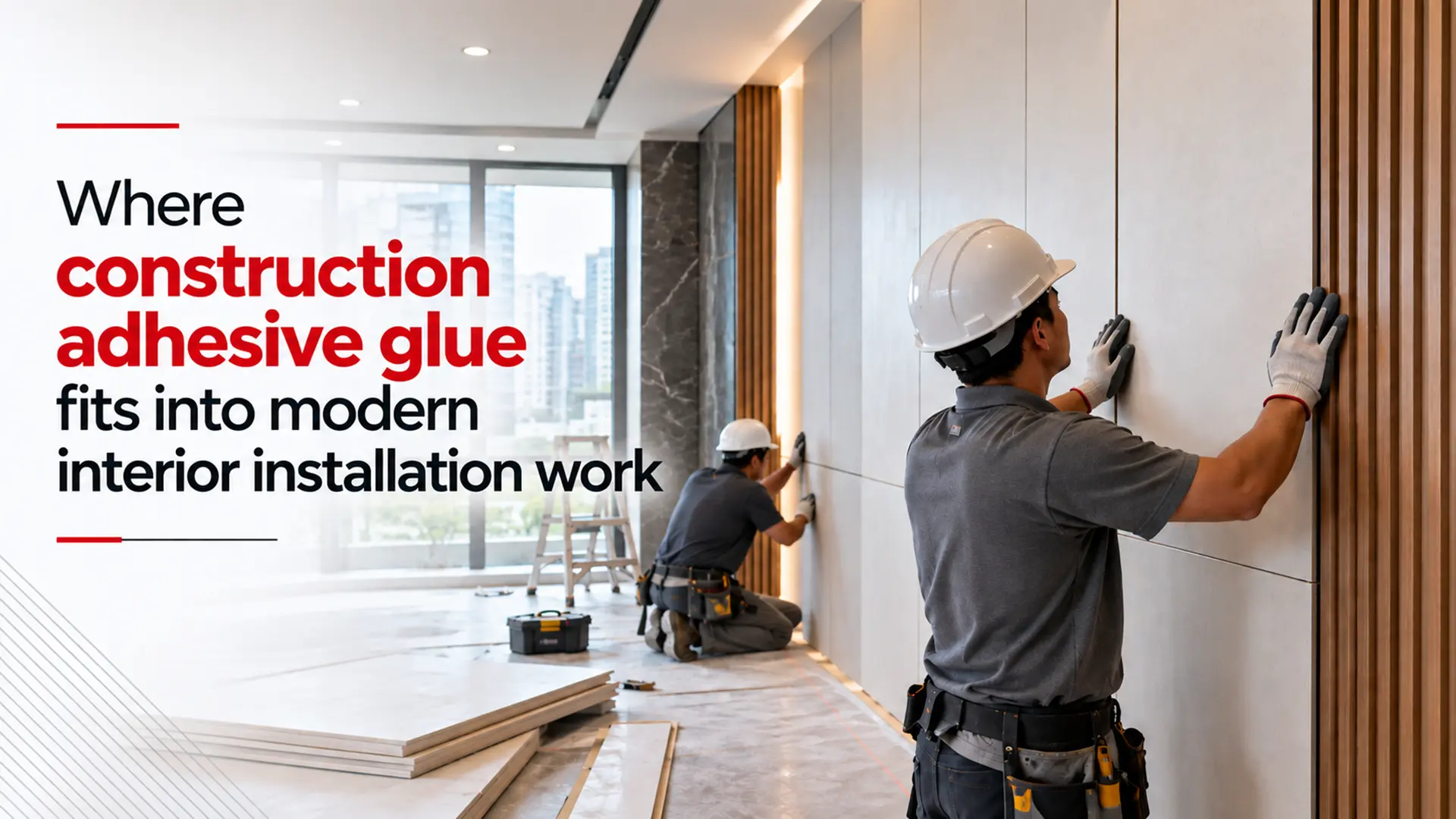
Where construction adhesive glue fits into modern interior installation work
Modern interior installation often involves more than one fixing method. Mechanical fasteners, framing components and bonding materials can each have a role depending on the material, surface and design requirement. Construction Adhesive Glue fits into this process where bonding can help position or secure suitable interior elements while maintaining a cleaner appearance.
The role of adhesive is not to replace every other fixing method. Instead, it can become one part of a carefully planned installation approach. For contractors and installers, understanding where bonding is appropriate can help make material selection and application more organised. Buildwell includes construction adhesive within its range of products for interior and installation requirements.
Starting with the material relationship
Every bonding application begins with two surfaces that need to work together. Their material type, condition, texture and cleanliness can influence how effectively an adhesive performs.
Before application, installers should understand the manufacturer’s recommendations for the specific product and intended surface. Dust, loose particles or unsuitable surface conditions can affect the bonding process.
This makes preparation an important part of using Construction Adhesive Glue. The adhesive itself is only one element of the complete installation process.
Where adhesive can simplify detailing
Interior features often contain trims, decorative profiles and lightweight elements where visible mechanical fixing may affect the intended appearance.
In suitable applications, bonding can help position such components while keeping the visible surface cleaner. This can be useful when the design relies on uninterrupted lines or carefully finished edges.
The exact application should always follow the product’s technical guidance. Buildwell can be considered when an interior project requires adhesive alongside other fixing materials as part of the installation sequence.
Adhesive and mechanical fixing can work together
There is often no need to think of adhesive and mechanical fixing as competing approaches. Depending on the application, they can have different roles within the same project.
Mechanical fasteners can provide a defined fixing method while adhesive may assist with positioning or bonding compatible decorative components. The appropriate combination depends on the material and installation conditions.
For installers using Construction Adhesive Glue, understanding this relationship can prevent the adhesive from being treated as a universal replacement for every other fixing method.
Surface preparation comes before application
A well prepared surface provides a more suitable starting point for bonding. Installers should remove loose dust and contaminants and ensure the surface meets the product requirements before application.
Moisture, temperature and surface condition may also need consideration depending on the adhesive being used.
This preparation stage is easy to overlook when the installation appears straightforward. However, the quality of the bonding process depends partly on what happens before the adhesive is applied.
Applying the right amount matters
More adhesive does not automatically mean stronger bonding. Application should follow the manufacturer’s recommended method and quantity for the intended use.
Excess material can create unnecessary mess and may affect finishing around the component. Too little may not provide the required contact.
A controlled application of Construction Adhesive Glue therefore helps maintain a cleaner and more predictable installation process.
Positioning is part of the job
Once adhesive has been applied, positioning becomes important. Components may need to be aligned carefully before the bonding process progresses.
This is particularly relevant when installing decorative profiles where even a small change in alignment can affect the appearance of the complete feature.
Installers should understand the product’s working time and follow the recommended procedure rather than relying on assumptions. Careful positioning allows the adhesive to perform its intended role without creating unnecessary corrections later.
Clean detailing depends on planning
One reason bonding is considered in interior installation is the possibility of reducing visible fixing points in suitable applications. This can support a cleaner decorative appearance where the design calls for minimal visible hardware.
However, achieving this result begins with planning. The installer needs to determine which components are suitable for bonding and how edges, joins and transitions will be handled.
Buildwell interior product range can be considered alongside appropriate fixing materials when developing a complete installation plan.
The surrounding finish still matters
An adhesive cannot compensate for poor material coordination. The selected component should already be suitable for the intended application and compatible with the surrounding finishes.
Colour, texture, profile and placement continue to influence the final appearance even when bonding is used.
For Construction Adhesive Glue, the installation method should therefore be considered alongside the complete decorative design rather than selected independently.
Storage can affect product handling
Installation quality is influenced not only by application but also by how the adhesive is stored before use. Packaging should remain protected and the product should be stored according to the manufacturer’s instructions.
Improper storage conditions can affect material handling and may make application less predictable.
For project teams purchasing adhesive in advance, checking storage requirements can be just as important as planning the installation itself.
Site conditions influence the process
Interior installation rarely happens in perfectly controlled conditions. Temperature, humidity, dust and surface condition can vary from one project to another.
These factors should be considered against the manufacturer’s recommendations before bonding begins. If conditions are unsuitable, installers may need to adjust the work sequence or select a more appropriate fixing method.
The performance of Construction Adhesive Glue should always be considered within the actual site conditions rather than judged independently of them.
When decorative components need a cleaner finish
Modern interiors frequently use profiles and decorative elements to create visual definition. These components may require careful positioning because their edges and alignment remain visible after installation.
Where the product and surface are compatible, adhesive can form part of the fixing approach for such components.
The objective is not simply to hide fasteners. It is to create a fixing method that supports the intended appearance while remaining appropriate for the material and application.
Installation efficiency comes from the complete workflow
A productive installation is rarely about one product alone. Material preparation, measuring, cutting, positioning, fixing and finishing all contribute to the final result.
Adhesive can fit into this sequence when its use is planned before work begins. This allows installers to prepare surfaces and tools and determine where bonding is appropriate.
With Buildwell Products, adhesive can be considered alongside other interior and ceiling materials to create a more coordinated workflow.
Knowing when not to use adhesive
Understanding limitations is just as important as knowing where a product can be used. Not every surface or component is suitable for bonding and some applications may require mechanical fixing or another installation method.
The manufacturer’s product information should therefore guide the selection process. Application should not be based only on the appearance of the material or assumptions about its compatibility.
A responsible installation approach uses Construction Adhesive Glue only where the product and application requirements support its use.
Building a cleaner installation approach
The value of adhesive in modern interior work comes from how appropriately it is integrated into the overall process. It can support certain bonding requirements, assist with selected decorative components and contribute to cleaner visible detailing where suitable.
At the same time, surface preparation, material compatibility, application quantity, positioning and site conditions remain important.
Buildwell construction adhesive can form part of this broader installation approach where the product’s intended application matches the project’s requirements. Used with proper planning, the adhesive becomes a practical component rather than an isolated material.
A small product with a specific role
Interior installation involves many individual decisions. The choice of fixing method may appear minor but can influence how efficiently components are positioned and how cleanly the finished detail appears.
Construction Adhesive Glue has a specific place within this process. Its role depends on compatibility, preparation and correct application rather than simply using adhesive wherever possible.
For contractors and interior installers, understanding that distinction helps create a more considered workflow. The result is an installation where every material has a defined purpose and contributes to the intended finish.
Contact Buildwell
Email: sales@buildwell.in
WhatsApp: 7900336699
Toll free: 1800 102 8031
Recent Posts
Where construction adhesive glue fits into modern interior installation work
How manufacturing precision shapes drywall screw performance on site