How ceiling materials respond to different spaces and installation conditions
Every interior space has different dimensions, usage patterns and installation requirements. This makes the selection of Ceiling Materials more than a visual decision. The right material needs to suit the environment, supporting framework, maintenance expectations and overall design of the space.
Buildwell provides ceiling and construction products that can be considered for different installation requirements. When material selection begins with an understanding of the space, it becomes easier to create a ceiling that is practical, consistent and visually appropriate.
Start with the space, not just the finish
A ceiling that works well in a commercial office may not necessarily be the right choice for another type of interior. Room size, daily activity, accessibility and the presence of building services can all influence the requirements.
This is why Ceiling Materials should be evaluated according to the conditions in which they will be installed. A material’s appearance is important but it is only one part of the decision.
The nature of the space should first establish what the ceiling needs to achieve.
Understanding the supporting system
Ceiling materials form part of a larger installation rather than functioning independently. Depending on the system, the assembly can include channels, grids, clips, hangers and other supporting components.
The framework needs to be suitable for the selected material and accurately positioned before installation begins. Poor alignment at this stage can affect the positioning and appearance of the finished ceiling.
Buildwell’s ceiling product range includes different components that can be considered when planning a coordinated installation rather than selecting each element separately.
Different spaces create different priorities
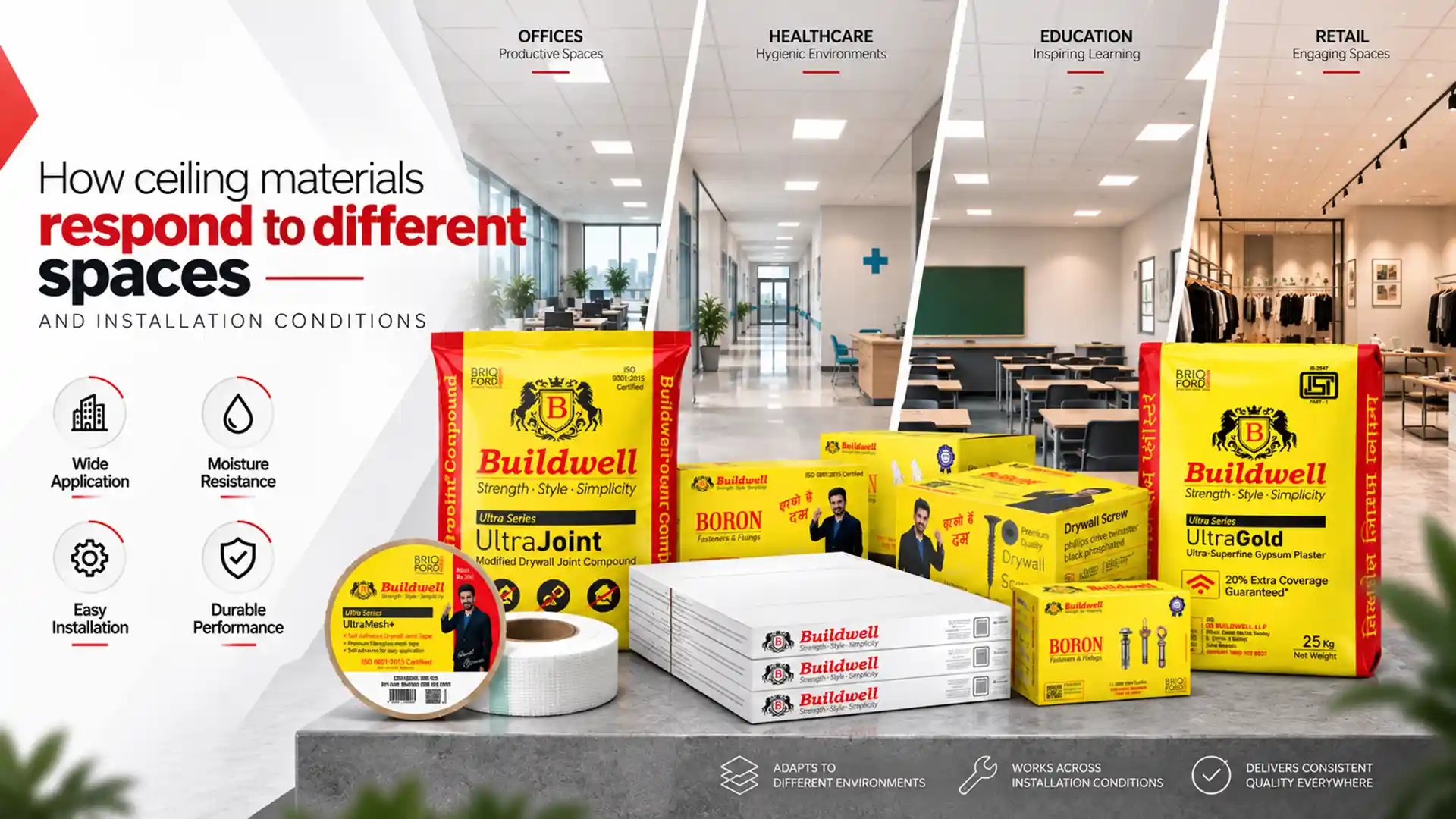
The way a room is used can influence the ceiling requirements. An office may place greater emphasis on organised lighting and a clean appearance while a commercial interior may require greater attention to access and routine maintenance.
Large institutional or service oriented spaces can introduce additional considerations around inspection and access above the ceiling.
For this reason, Ceiling Materials should be selected after considering the actual requirements of the space. A standard approach may not provide the same result across every project.
Environmental conditions matter
The surrounding environment can affect the suitability of a ceiling system. Humidity, moisture exposure and general site conditions should be considered before a product is selected.
Materials need to be appropriate for their intended application and installed according to the relevant product requirements. Environmental conditions should not be treated as an afterthought because they can influence long term performance.
When planning a project, Buildwell products can be assessed according to the conditions of the intended installation and the requirements of the complete ceiling system.
Coordinating lighting with the ceiling
Modern interiors often integrate lighting directly into the ceiling layout. Light fixtures, ventilation components and other services can influence the positioning of ceiling sections.
Planning these elements together helps avoid unnecessary cutting or awkward adjustments during installation. It can also create a more balanced visual arrangement.
The choice of Ceiling Materials should therefore be made with the lighting plan in mind. The material, framework and service openings need to work together for a clean final appearance.
Room proportions influence the visual result
The dimensions of a room can change how a ceiling finish is perceived. A repeated pattern may appear more noticeable in a compact space while a large interior may require greater attention to layout continuity.
Colour, texture and joint patterns can also affect the sense of scale. A ceiling should support the proportions of the room rather than compete with its other design features.
Buildwell allows project teams to consider different ceiling products according to the visual and functional requirements of the interior.
Site conditions can change installation planning
The actual conditions at a project site may differ from what appears on a drawing. Access limitations, working height, existing structures and the sequence of other construction activities can all influence installation.
These factors should be assessed before fixing begins. Measurements should be confirmed on site and the installation sequence should account for the surrounding work.
The performance of Ceiling Materials depends not only on their selection but also on whether the installation method is suitable for the actual site conditions.
Large areas demand greater consistency
A small alignment difference may not be obvious in an isolated section. Across a large ceiling, however, repeated inconsistencies can become much more visible.
The supporting framework should therefore be installed with care and fixing positions should remain consistent. Repeated panels, tiles or grid lines need particular attention because their pattern makes alignment easier to notice.
With a systematic installation approach, the ceiling can maintain a more uniform appearance across larger areas.
Maintenance should be planned before installation
Access to the area above a ceiling can become important when services need inspection or maintenance. Ignoring this requirement during planning may make future work unnecessarily difficult.
The ceiling arrangement should therefore take accessibility into account where the application requires it. The selected material and supporting system need to be compatible with the maintenance expectations of the space.
This is another reason Ceiling Materials should be chosen as part of the overall ceiling plan rather than as a final decorative decision.
When appearance and function meet
A ceiling contributes significantly to the character of an interior. Its colour, pattern and surface finish can influence how the room feels while its construction determines how effectively it performs its intended role.
A simple finish may complement an interior that already contains several decorative features. In a more restrained space, a structured ceiling pattern may provide additional visual interest.
Buildwell can be considered during this process when project teams need to balance decorative requirements with the practical demands of installation.
The problems created by late selection
Choosing the ceiling material too late can create avoidable complications. By that stage, the framework, lighting arrangement and service locations may already have been planned around another specification.
A change can then require adjustments to dimensions, fixing methods or supporting components. Early selection provides more time to confirm compatibility and organise the installation sequence.
Planning Ceiling Materials at an early stage therefore helps connect design decisions with practical site requirements.
Installation quality shapes the final appearance
The material itself does not guarantee a good result. Framework alignment, fixing accuracy, joint treatment and edge finishing all influence how the completed ceiling looks.
Installers should follow the requirements of the selected product and system rather than applying an identical method to every material. Correct installation practices help the ceiling maintain its intended form and appearance.
The range available from Buildwell can be incorporated into a planned installation where supporting components and finishing requirements are considered together.
Choosing according to the actual application
There is no universal ceiling specification that suits every interior. The appropriate choice depends on the environment, room proportions, supporting structure, maintenance needs and desired appearance.
This makes product selection a process of matching requirements rather than simply choosing the most visually attractive option.
Ceiling Materials can perform effectively when their characteristics are suited to the conditions in which they are installed. Careful planning also reduces the possibility of making changes once work has already started.
Building a coordinated ceiling system
A successful installation begins before the first component reaches the ceiling. The space needs to be assessed, service requirements reviewed and supporting structure planned before the surface material is fixed.
Buildwell’s range can form part of this coordinated approach, where ceiling components are considered according to how they interact within the complete installation.
This method can make the work more predictable while helping maintain consistency between the design intent and the finished result.
Making the right choice for every space
The best ceiling is one that responds to the conditions around it. Environmental exposure, room use, lighting, maintenance access and installation limitations all have a role in determining the appropriate material.
By considering these factors early, project teams can select Ceiling Materials that are better suited to the actual requirements of the interior.
With Buildwell, designers, contractors and project teams can explore Ceiling Products as part of a broader installation plan. When the material, supporting system and site conditions are considered together, the finished ceiling can achieve a better balance between appearance, practicality and installation consistency.
Contact Buildwell
Email: sales@buildwell.in
WhatsApp: 7900336699
Toll free: 1800 102 8031
Recent Posts

How WPC louvers bring texture, depth and structure to modern interiors