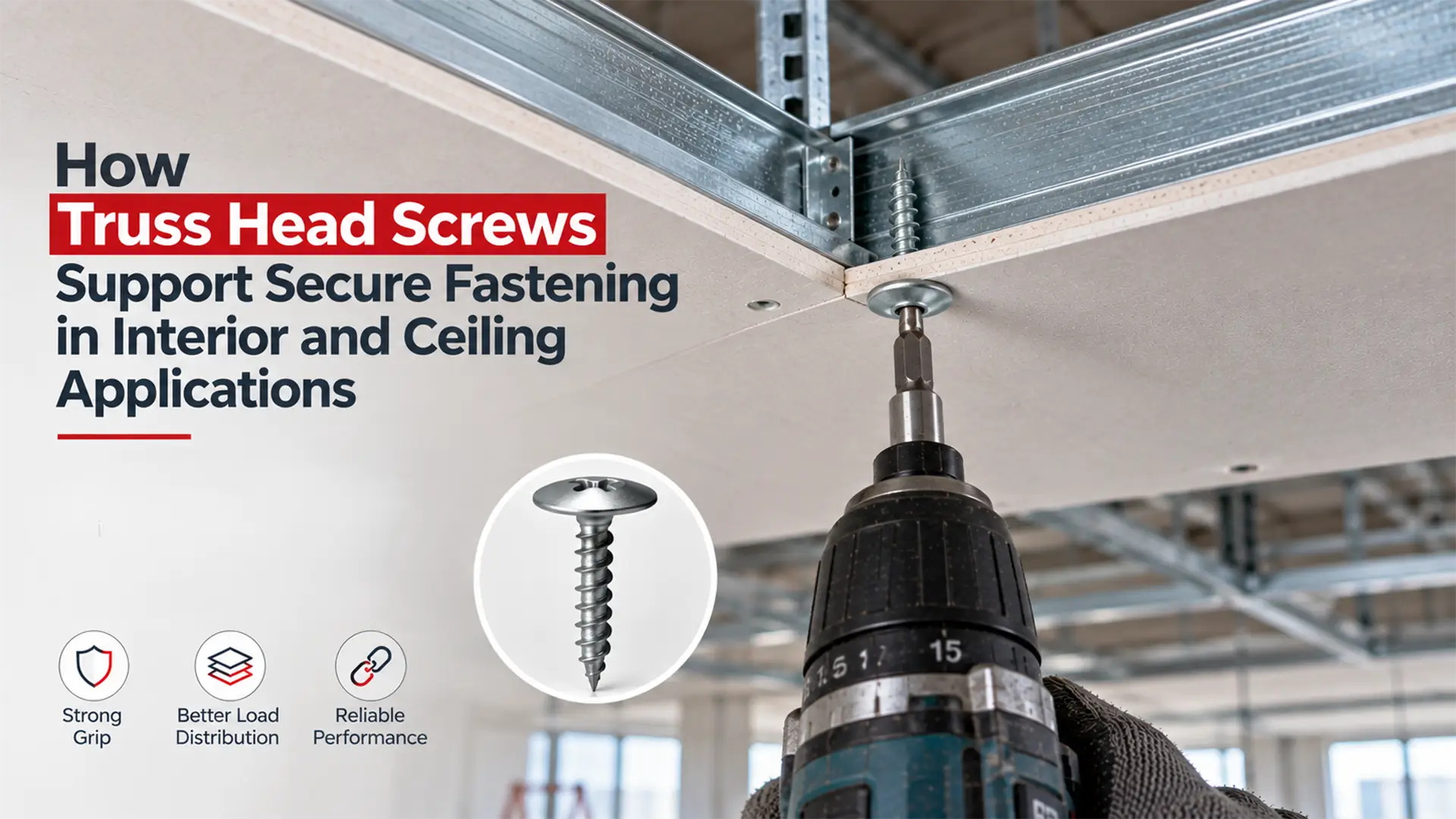
How Truss Head Screws Support Secure Fastening in Interior and Ceiling Applications
A reliable fastening system is important when interior components need to remain accurately positioned during and after installation. Truss Head Screw designs are particularly useful where a broader head can provide a secure bearing area while maintaining a relatively low profile. In ceiling and interior work, this can support neat fixing and consistent assembly when the appropriate screw is selected for the application.
Buildwell supplies fastening products for construction and interior installation requirements where fixing accuracy and dependable assembly are important. Understanding how screw head design affects fastening can help installers make better choices for different components.
Why Screw Head Design Matters
A screw does more than join two materials. The shape of its head influences how force is distributed around the fixing point and how the fastener sits against the material.
A Truss Head Screw has a broad head profile that can provide a larger contact area than some other screw designs. This characteristic can be useful when fastening relatively thin interior components where controlled pressure around the fixing point is desirable.
The correct result still depends on matching the screw to the material, thickness and installation method.
A Wider Bearing Area for Controlled Fixing
During installation, tightening a fastener creates pressure between the screw head and the component being fixed. A broader head can distribute this pressure over a larger area rather than concentrating it around a very small contact point.
This makes the Truss Head Screw relevant to applications where the fastening point needs stable contact without an unnecessarily prominent head profile.
For interior work, this can contribute to a cleaner assembly while helping the installed component remain properly positioned.
Supporting Ceiling Component Installation
Ceiling systems contain several connected components that need to remain aligned during assembly. Fasteners used within these systems therefore have to suit the specific connection being made.
A Truss Head Screw can be considered for suitable interior and ceiling fastening points where its head geometry matches the requirements of the component.
Buildwell fastening range supports construction and interior installation work where different fixing components may be required for different stages of assembly.
The Fastener Must Match the Material
No screw design should be selected only because its head looks suitable. The material being fixed plays an equally important role.
Sheet materials, metal sections and other interior components can have different fastening requirements. Screw length, thread configuration, diameter and head design should all be considered before installation.
A Truss Head Screw is most effective when its specifications are appropriate for the particular substrate and fixing condition.
When a Low Profile Helps
Interior installations often have limited visual and physical space around fastening points. A fastener with a suitable head profile can help maintain a neater finished assembly.
The broad head of a Truss Head Screw can provide useful surface contact while keeping the fastening point relatively unobtrusive compared with some larger head designs.
This can be helpful in applications where the fastener remains visible or where nearby components need sufficient clearance.
Precision During Installation
The performance of a fastener is influenced by how accurately it is installed. Incorrect positioning can affect alignment while excessive tightening can damage the material around the fixing point.
Installers should use an appropriate driver and maintain controlled pressure during fastening. The screw should be seated correctly without forcing it beyond what the material and application require.
Buildwell emphasises dependable fastening as part of efficient interior installation where accurate assembly contributes to the final quality of the work.
Reducing Unnecessary Movement
Fastening is not simply about holding two components together at one moment. The connection needs to remain stable during subsequent installation stages and normal service conditions.
A properly selected Truss Head Screw can help maintain firm contact between compatible components when installed according to the requirements of the system.
Correct spacing between fixing points is also important. The screw itself cannot compensate for an unsuitable fixing layout or an incorrectly prepared substrate.
Clean Fixing in Interior Detailing
Interior projects often place considerable emphasis on appearance. Uneven fastening points or poorly seated screws can interrupt an otherwise neat installation.
The head shape of a Truss Head Screw can provide a defined contact point that works well in applications where a controlled visible fixing is acceptable.
The final appearance also depends on accurate positioning. Consistent fixing locations create a more orderly result across repeated interior components.
Why Consistency Matters on Larger Installations
A single fastening point may not reveal much about installation quality. On a larger ceiling or interior project, however, dozens or even hundreds of fixing points can collectively influence the quality of the finished work.
Consistent screw selection, spacing and installation depth help maintain uniformity across the project.
For this reason, choosing a suitable head screw as part of a planned fastening system can help installers maintain consistency rather than relying on different fasteners for similar connections.
Avoiding Common Fastening Errors
Several basic installation mistakes can reduce the effectiveness of an otherwise suitable fastener. Using the wrong screw length can affect engagement while poor alignment can create unnecessary stress around the fixing point.
Overdriving is another concern. Excessive torque can damage the component or affect the way the screw head sits against the surface.
A Truss Head Screw should therefore be installed with controlled force and using equipment suitable for the selected fastener.
Buildwell and Reliable Interior Fastening
Fasteners may be small components but they have an important role in the accuracy and stability of construction assemblies. Buildwell includes Fastening Products within its broader range for ceiling and interior installation requirements.
For project teams, the objective should be to select each fastener according to the connection it needs to make. This approach helps avoid treating all screws as interchangeable components.
Where its dimensions and head profile are suitable, a Truss Head Screw can contribute to secure and neat fastening across relevant interior applications.
Looking Beyond the Screw
A dependable fastening point is the result of several factors working together. The screw needs suitable dimensions while the substrate must provide adequate engagement and the installer needs to position and tighten the fastener correctly.
This broader approach is particularly important in ceiling work because individual components form part of a larger installation system.
Buildwell
construction and interior product range can support projects where compatible materials and fastening components need to work together as part of an organised installation process.
Building Better Interior Assemblies
Good fastening does not always attract attention once an installation is complete. That is often a sign that the components have been selected and installed correctly.
A Truss Head Screw can support this objective in suitable applications by combining a broad bearing surface with a practical head profile for controlled fixing.
When the fastener is matched correctly with the substrate and installed with precision, it can contribute to the secure assembly, clean appearance and dependable performance expected from modern interior and ceiling installations.
Contact Buildwell
Email: sales@buildwell.in
WhatsApp: 7900336699
Toll Free: 1800 102 8031
Recent Posts