How linear detailing adds depth, texture, and visual rhythm to modern interiors
Modern interiors are increasingly moving away from flat and visually predictable finishes. Designers are using texture, repetition, shadow and proportion to create spaces that feel layered without becoming crowded. Linear elements are particularly effective because they introduce structure while allowing light and shadow to change the appearance of a space throughout the day. A Louvre Panel can become an important part of this approach when used thoughtfully across residential, hospitality, retail and commercial interiors.
The appeal lies in the relationship between the individual profiles and the surrounding architecture. Instead of treating the finish as a standalone decorative feature, Buildwell encourages designers to consider how rhythm, spacing, lighting and furniture can work together to create a more complete visual composition.
The eye responds to repetition
Repetition is one of the simplest ways to create visual order.
When evenly spaced vertical or horizontal profiles appear across a surface, the eye naturally follows their movement. This creates rhythm without requiring elaborate patterns or excessive ornamentation.
A carefully selected Louvre Panel can establish this rhythm through repeated lines while giving the interior a stronger sense of structure.
Buildwell sees this as particularly useful in contemporary spaces where simplicity is important but completely plain surfaces may feel too static
Depth comes from more than colour
A room does not need dramatic colours to feel dimensional.
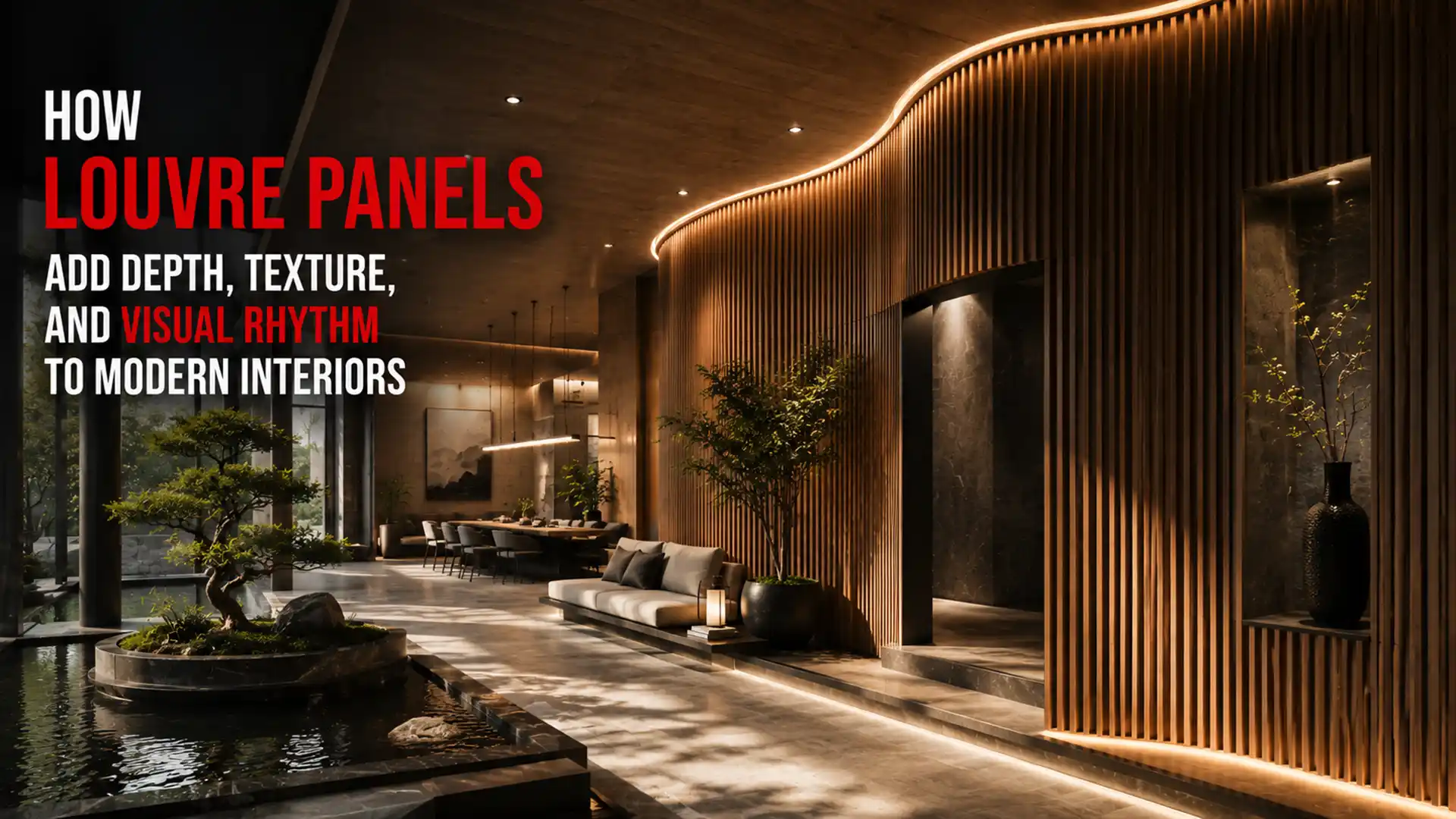
Changes in projection, spacing and shadow can create depth even when the overall colour palette remains restrained. Linear profiles are effective because their physical arrangement interacts with ambient and artificial light.
During the day, natural light may create softer variations across the surface. Under focused lighting, the same profiles can produce stronger shadows and highlights.
Buildwell recommends considering this changing visual behaviour when selecting a Louvre Panel for a prominent interior area.
The finish can therefore appear subtly different as the lighting conditions change.
Choosing the right spacing changes the character
The distance between individual profiles has a direct influence on how the finished installation feels.
Closer spacing can create a denser visual effect and stronger texture. Wider spacing can make the composition feel lighter and allow more of the underlying surface to remain visible.
This gives designers considerable flexibility when using a Louvre Panel as part of an interior concept.
Buildwell encourages project teams to evaluate spacing alongside room dimensions. A proportion that works beautifully in a large commercial space may feel excessive in a compact residential setting.
Scale should always guide the design decision.
Vertical direction can influence perception
Orientation is another important design consideration.
Vertical lines can draw attention upwards and create an impression of greater height. This can be useful in rooms where the designer wants to emphasise ceiling height or create a more elongated visual composition.
Buildwell considers this relationship between geometry and perception when developing contemporary interior applications.
A Louvre Panel installed with a deliberate vertical rhythm can help guide the eye through the space while adding texture without relying on heavy decorative elements.
The result can feel structured yet understated.
Texture becomes stronger under controlled lighting
Lighting and surface design should rarely be considered separately.
A linear finish can create subtle shadows under soft illumination or stronger contrast when paired with directional lighting. This makes it particularly useful in reception areas, hospitality interiors, retail environments and other spaces where atmosphere matters.
Buildwell recommends reviewing the planned lighting before finalising the placement and orientation of a Louvre Panel.
When both elements are considered together, lighting becomes part of the decorative experience rather than simply serving a functional purpose.
Furniture should not compete with the linear pattern
A strong architectural finish needs visual breathing space around it.
If furniture, artwork, lighting and decorative elements all demand attention at the same time, the interior can quickly feel crowded. Linear detailing generally works best when surrounding elements provide enough contrast to allow its rhythm to remain visible.
Buildwell encourages designers to treat the Louvre Panel as one component within the larger composition rather than making every feature equally dominant.
A restrained furniture palette can allow the texture and shadow pattern to become the main visual character of the space.
Selective application creates stronger impact
Covering an entire interior with one decorative treatment is not always necessary.
A selected section can have a greater visual impact because it creates contrast between textured and relatively calm areas. This approach can be useful for reception backdrops, media areas, dining spaces, bedroom features, retail displays and hospitality settings.
Buildwell supports selective application because it allows designers to create visual hierarchy without overwhelming the interior.
A strategically placed Louvre Panel can define a specific zone while helping the rest of the room maintain a balanced appearance.
Transitions influence the quality of the installation
The most attractive linear design can lose its impact if adjoining areas are poorly detailed.
Corners, edges, openings and junctions need to be considered as part of the overall composition. The direction of the profiles should feel intentional, particularly where the installation meets another finish.
Buildwell pays attention to these details because good design depends on how individual components come together.
When a Louvre Panel meets another architectural element, the transition should look considered rather than appearing to be an interruption in the pattern.
Linear detailing can support different design languages
One of the strengths of linear finishes is their adaptability.
The same basic visual language can support a warm residential interior, a sophisticated hospitality setting or a contemporary commercial space depending on the surrounding materials, colours and lighting.
Buildwell allows designers to explore this flexibility through different interior applications.
A Louvre Panel can appear subtle when paired with neutral finishes or become more expressive when combined with contrasting textures and carefully positioned lighting.
The surrounding design determines much of its personality.
The installation needs visual discipline
A linear design naturally draws attention to alignment.
Even small inconsistencies can become noticeable because the eye follows repeated lines across the installation. Accurate measurements, consistent spacing and careful positioning therefore play an important role in achieving the intended appearance.
Buildwell understands that linear detailing demands attention to proportion as much as workmanship.
Before installation begins, contractors should establish reference points and review how the profiles will align with adjoining architectural features. This helps maintain continuity across the completed area.
A finish that evolves with the interior
Interior trends may change, but strong geometric principles tend to remain relevant.
Rhythm, proportion, repetition and contrast are fundamental elements of design rather than temporary trends. This gives linear finishes the potential to remain visually useful even as furniture, colours and accessories change.
Buildwell believes that durable interior design comes from combining contemporary expression with established design principles.
When a Louvre Panel is selected according to the proportions and character of the space, it can continue contributing to the interior even when other decorative elements are updated.
Conclusion
Depth and visual interest do not always require elaborate decoration. Repetition, spacing, orientation, texture and lighting can create a layered interior while maintaining a clean architectural character.
A Louvre Panel can contribute to this effect by introducing linear rhythm and changing patterns of light and shadow across selected interior areas. Its success depends on how carefully the profile, spacing, scale, lighting, furniture and surrounding finishes are brought together.
Buildwell believes that the strongest interiors use decorative elements with purpose rather than simply adding more detail. Buildwell supports architects, contractors and interior designers in creating contemporary spaces where texture and geometry complement the broader design.
For projects seeking a structured visual feature without overwhelming the room, linear detailing offers a versatile way to introduce depth, rhythm and character.
Buildwell continues to focus on interior products that allow professionals to explore modern design while maintaining a refined architectural balance. With thoughtful placement and disciplined detailing, Buildwell Products can help turn simple interiors into spaces with greater visual depth and personality.
Contact Buildwell
Email: sales@buildwell.in
WhatsApp: 7900336699
Toll free: 1800 102 8031