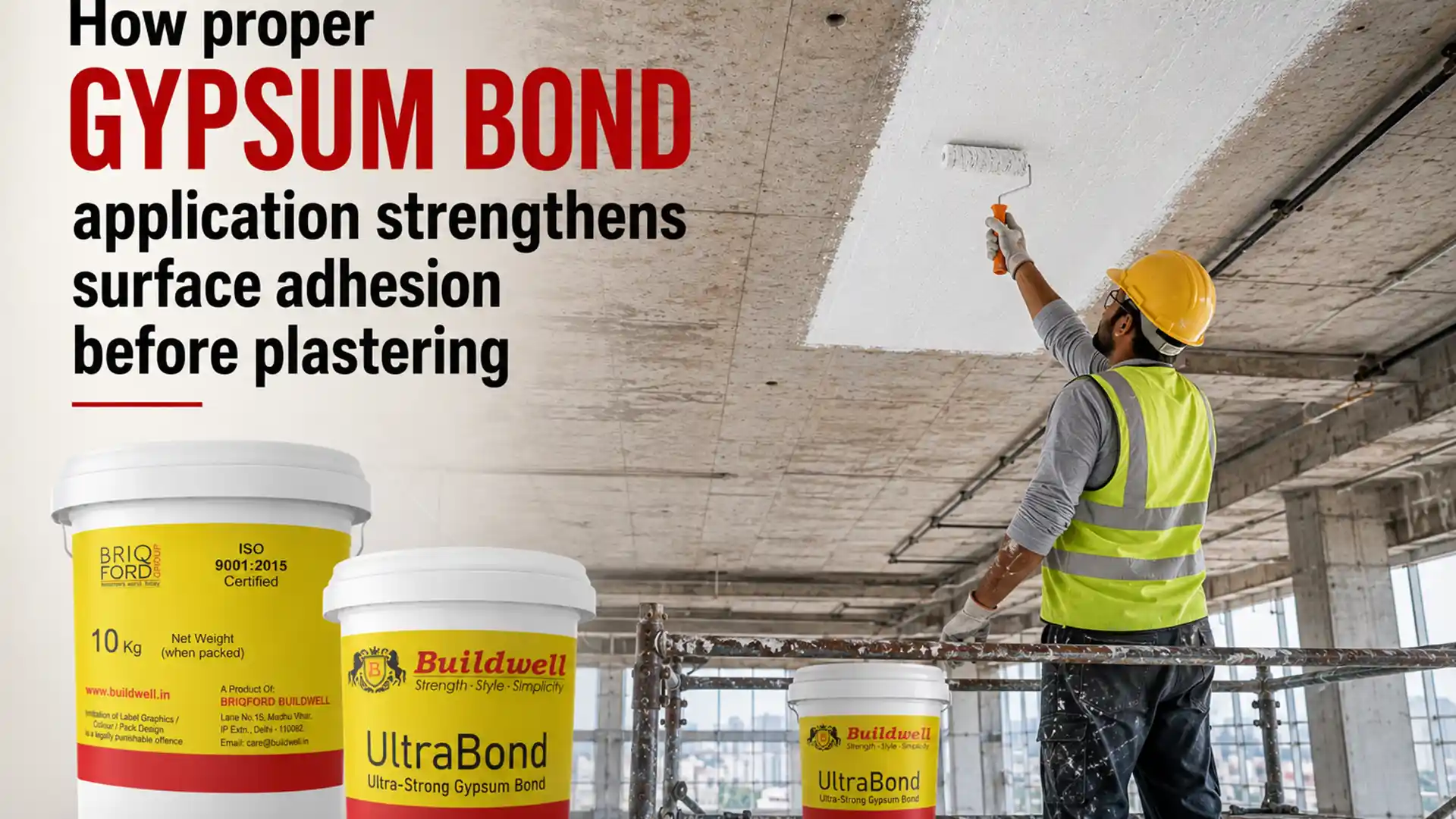
How proper gypsum bond application strengthens surface adhesion before plastering
The durability of any plastered surface depends on much more than the quality of the plaster itself. Before plastering begins, the condition of the base surface plays a significant role in determining how effectively the plaster performs throughout the life of the building. A well prepared substrate provides the foundation for stronger adhesion, smoother application, and better finishing consistency. This is why Gypsum Bond has become an important part of modern plastering practices across residential, commercial, healthcare, hospitality, and institutional projects. Buildwell understands that achieving premium interior finishes starts with preparing the surface correctly before the first layer of plaster is applied.
As construction methods continue evolving, expectations for interior quality have increased considerably. Contractors are expected to deliver smooth finishes while maintaining productivity and long term performance. Proper surface preparation has therefore become a critical stage that directly influences the quality of every plastering project.
Surface preparation is the first step towards quality
Every plastering project begins with evaluating the surface that will receive the plaster.
Concrete often contains dust, loose particles, curing compounds, and minor surface irregularities that may influence adhesion if left untreated. Ignoring these conditions can affect the consistency of the finished surface and increase the possibility of unnecessary corrective work.
Professional contractors prepare the substrate carefully before applying Gypsum Bond because a properly prepared base creates favourable conditions for the following plastering stages.
Buildwell believes successful plastering always begins with preparation rather than correction.
Strong adhesion supports dependable plaster performance
The connection between the substrate and plaster determines how effectively the entire finishing layer performs.
Good adhesion helps the plaster remain uniformly attached across the surface while supporting a smooth and consistent finish. When adhesion is strengthened during preparation, contractors can proceed with greater confidence during plaster application.
Using Gypsum Bond before plastering helps establish better contact between the base surface and the Finishing Material, allowing the installation process to progress more efficiently.
Careful preparation contributes directly to dependable construction quality.
Consistent application improves surface uniformity
Professional workmanship depends on consistency throughout the project.
Surface preparation should follow organised procedures so every section receives equal attention before plastering begins. Variations in preparation may influence the appearance of the completed interior after painting and decorative finishes have been applied.
Experienced installers apply Gypsum Bond systematically across prepared surfaces to maintain consistent conditions before plaster application starts.
This disciplined approach helps produce interiors that appear smooth and visually balanced from one area to another.
Planning reduces unnecessary rework
Construction projects involve multiple activities taking place within limited timelines.
Electrical work, ceiling installation, flooring, and interior finishing often progress simultaneously. Proper planning allows each activity to support the next instead of creating interruptions or repeated corrections.
Including Gypsum Bond within the planned plastering sequence helps contractors organise work more efficiently while reducing avoidable delays during finishing.
Buildwell understands that organised construction improves both productivity and workmanship.
Environmental conditions deserve careful attention
Construction sites operate under changing environmental conditions throughout the year.
Temperature, humidity, airflow, and ventilation all influence preparation and plastering activities. Experienced contractors evaluate these practical conditions before beginning surface treatment and plaster application.
Applying gypsum with consideration for actual site conditions helps maintain greater consistency throughout the preparation stage while supporting dependable plaster application afterwards.
Successful construction combines technical knowledge with practical site awareness.
Skilled workmanship remains essential
Even high quality construction materials depend on experienced application.
Professional installers understand how preparation methods, application techniques, and timing influence the quality of the finished surface. Their experience allows them to identify potential concerns before plastering begins.
Working with Gypsum Bond enables skilled contractors to establish a well prepared substrate that supports smoother application and improved finishing quality across the project.
Buildwell believes craftsmanship continues to be one of the greatest contributors to successful interior construction.
Large projects require repeatable quality
Modern developments often involve hundreds of rooms and thousands of square metres of interior finishing.
Maintaining the same standard throughout these projects requires disciplined procedures that every installation team can follow consistently.
Contractors increasingly rely on Gypsum Bond because organised preparation methods help maintain uniform plastering conditions across different floors, work zones, and installation teams.
Repeatable workmanship improves project management while strengthening confidence in the completed building.
Continuous inspection strengthens finishing quality
Quality control should begin before plaster is applied.
Professional supervisors inspect substrate preparation, surface cleanliness, application consistency, and readiness for plastering before allowing the next stage of work to begin. Identifying small concerns early prevents larger corrections later.
Projects using Gypsum Bond benefit from regular inspection because every prepared surface can be verified before plaster application starts.
Preventive quality control remains more effective than corrective repairs after project completion.
Proper preparation supports long term performance
Interior finishes are expected to remain attractive throughout years of regular use.
Their durability depends heavily on the care taken during preparation and installation. Well organised surface preparation contributes to smoother plaster application, improved finishing quality, and greater confidence in the completed work.
Selecting gypsum allows architects, contractors, and developers to strengthen one of the most important stages of the plastering process before the finishing material is applied.
Buildwell continues supporting modern construction through dependable products developed for professional plaster preparation and interior finishing.
Conclusion
Strong plaster adhesion begins with careful preparation rather than the plaster itself. Clean substrates, organised planning, consistent application, skilled workmanship, environmental awareness, and continuous quality inspection all contribute to better plastering results and dependable long term performance.
Choosing high quality Gypsum Bond enables construction professionals to prepare surfaces more effectively before plastering begins, helping achieve smoother finishes and improved interior quality. When reliable products are combined with disciplined installation practices, the completed surface reflects professional workmanship from the foundation upward.
Buildwell remains committed to providing products that support modern construction standards while helping contractors deliver interiors that remain smooth, durable, and visually refined for years.
Contact Buildwell
Email: sales@buildwell.in
WhatsApp: 7900336699
Toll-free: 1800 102 8031
Recent Posts
Where construction adhesive glue fits into modern interior installation work